September 18, 2026 • Tomás Guerreiro • 11 min reading time • Specs verified June 18, 2026
Smart Hose-Bib Timers Face-Off: Rachio Smart Hose Timer vs. Orbit B-hyve XD 4-Port vs. RAINPOINT WiFi vs. Meross
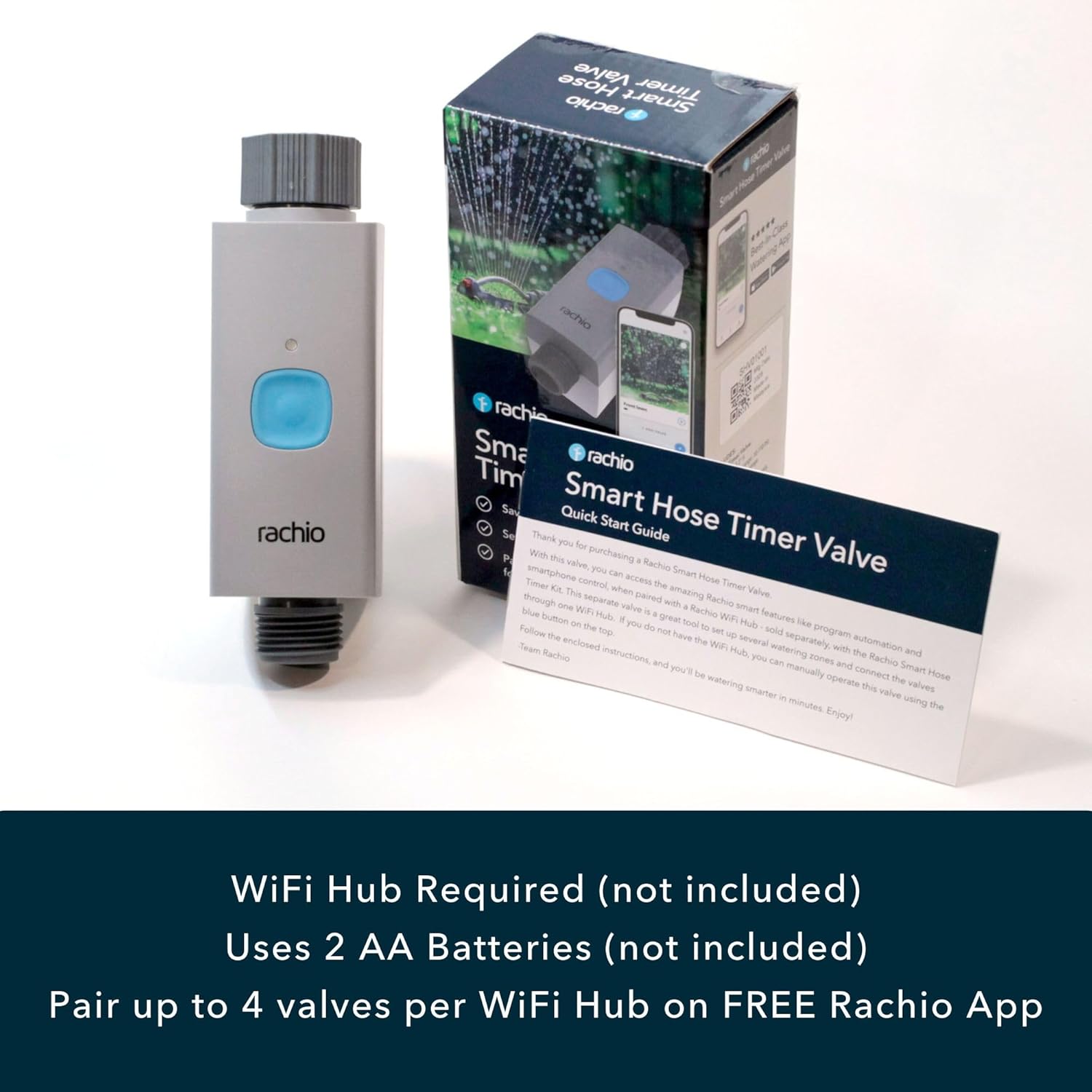
A smart hose-bib timer screws onto an outdoor faucet — that threaded spigot sticking out of your house — connects to your home WiFi, and lets you schedule or remotely trigger watering from your phone. No in-ground system required. No permit, no trenching, no backflow preventer paperwork. You set a schedule, the valve opens and closes on its own, and your raised beds or container garden gets watered while you’re at work. Simple in concept — but the gap between “simple concept” and “reliable execution” is exactly where these four devices split apart.
If you’re already running a multi-zone controller like a Rachio 3 or Hunter Pro-HC for your turf, you probably landed here because you want a no-trench solution for a side-yard bed, a container garden, or a second property. You know the fundamentals. What you need is an honest account of where each timer succeeds, where each one quietly fails, and a clear decision frame so you can stop reading forum threads and order the right unit today.
| EDITOR'S PICKOrbit B-hyve XD 4-Port Smart Ho… | Mid-tierOrbit B-hyve XD 4-Port Smart Ho… | Budget pickmeross WiFi Water Timer for Gar… | |
|---|---|---|---|
| Ports | 4 | 4 | — |
| Wi-Fi | ✓ | ✗ | ✓ |
| Bluetooth | — | ✓ | — |
| Hub included | ✓ | — | — |
| Remote control | — | ✓ | — |
| Inlet material | — | — | Brass |
| Price | $129.98 | $77.20 | $68.99 |
| See on Amazon → | See on Amazon → | See on Amazon → |
The Four Contenders: What You’re Actually Choosing Between
Before the face-off, a fast orientation on the field:
- Rachio Smart Hose Timer — Rachio’s entry into the hose-bib category, extending the brand’s weather-intelligence logic to faucet-level control. Single-zone, app-driven, battery-powered.
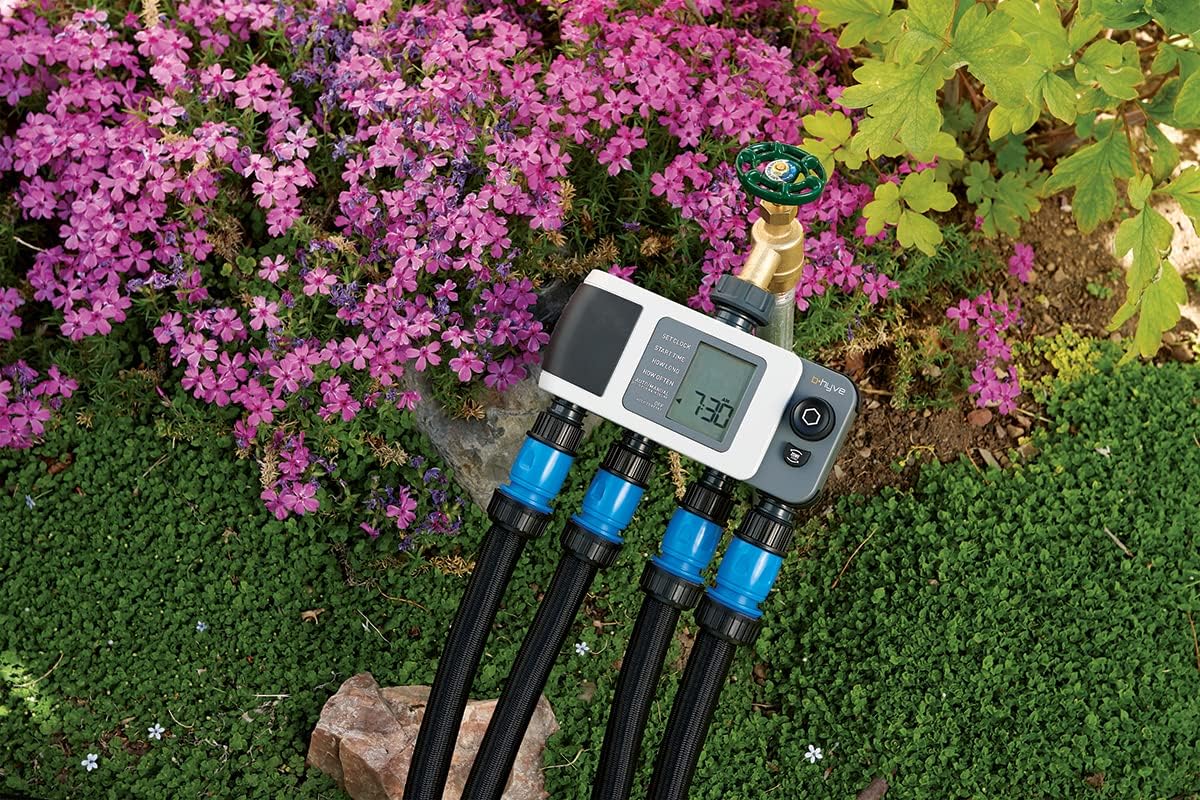
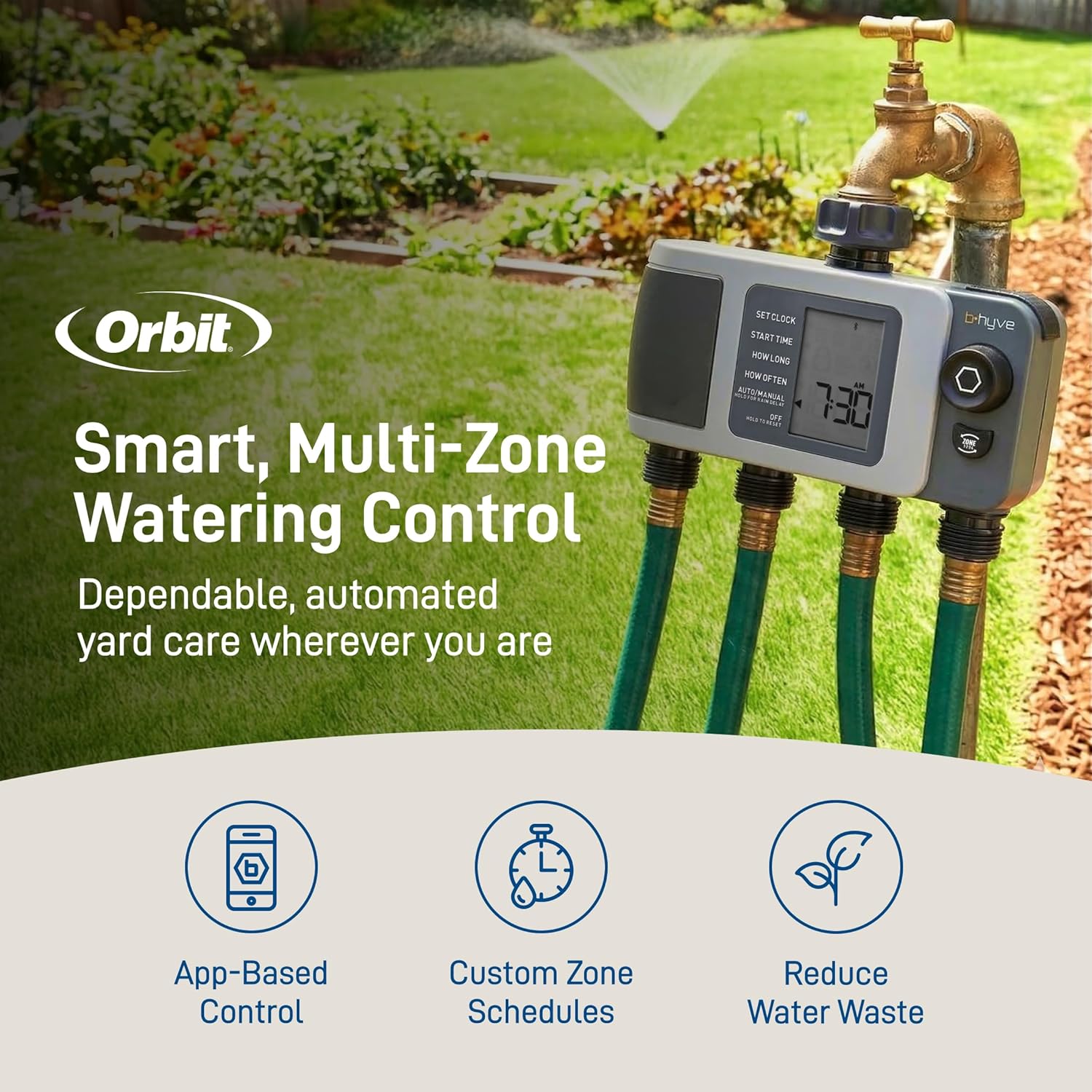
- Orbit B-hyve XD 4-Port — The most ambitious unit here. Four independently scheduled zones off a single manifold, WiFi-connected, designed to replace a rack of individual timers at one hose bib.
- RAINPOINT WiFi Timer — A budget-tier WiFi unit that reviewers consistently describe as surprisingly capable for the price. Single-zone.
- Meross Smart Water Timer — The only HomeKit-native device in this comparison group. A genuine differentiator for Apple ecosystem households that has been largely overlooked in the broader smart-timer conversation.
Quick specs comparison
| Device | Zones | WiFi | HomeKit | Approx. Battery Life | Tier |
|---|---|---|---|---|---|
| RAINPOINT WiFi Timer | 1 | Yes | No | ~6 months | meross — $68.99 |
| Meross Smart Water Timer | 1 | Yes | Yes | ~6 months | Orbit — $77.20 |
| Rachio Smart Hose Timer | 1 | Yes | No | ~6 months | Orbit — $77.20 |
| Orbit B-hyve XD 4-Port | 4 | Yes | No | ~6 months | Orbit — $129.98 |
Specs drawn from manufacturer published documentation as of Q2 2026. Battery life is heavily load-dependent.
Where Each Timer Earns Its Stars — And Where It Doesn’t
RAINPOINT WiFi Timer
RAINPOINT doesn’t carry Rachio’s brand recognition or Orbit’s catalog depth, and the product is priced to reflect that. What reviewers consistently surface, though, is that it punches above its weight on two specific axes: WiFi range and setup simplicity.
Multiple owners report connecting RAINPOINT units at distances and through obstructions where other timers would require a WiFi extender. For a detached garage garden, a side-yard bib far from the router, or a backyard setup where the WiFi signal has always been marginal, this matters considerably. Setup is described repeatedly as very simple — multiple reviewers specifically note the onboarding process as a positive differentiator over competing single-zone units.
The EPA WaterSense Program (“Watering Tips and Resources,” epa.gov) makes a consistent point worth internalizing: the biggest efficiency gains from smart timers come from actually using the scheduling features. A timer with a lower setup barrier will, in practice, be used more effectively by more homeowners than one with a steeper learning curve. RAINPOINT’s onboarding story aligns with that principle.
RAINPOINT doesn’t match Rachio on weather intelligence or Orbit on zone count. But for a single-zone application where the primary requirement is “set it, forget it, access it remotely, and don’t lose the connection,” it’s a credible pick — especially for first-time buyers graduating out of a basic mechanical timer category who aren’t ready to commit to a premium price point.
If X, then Y: If you have one zone, a marginal WiFi signal, and a budget under $50, RAINPOINT is the honest recommendation. Don’t pay a Rachio premium for features you won’t use.
meross
$68.99
In stock on Amazon
Check price on AmazonMeross Smart Water Timer
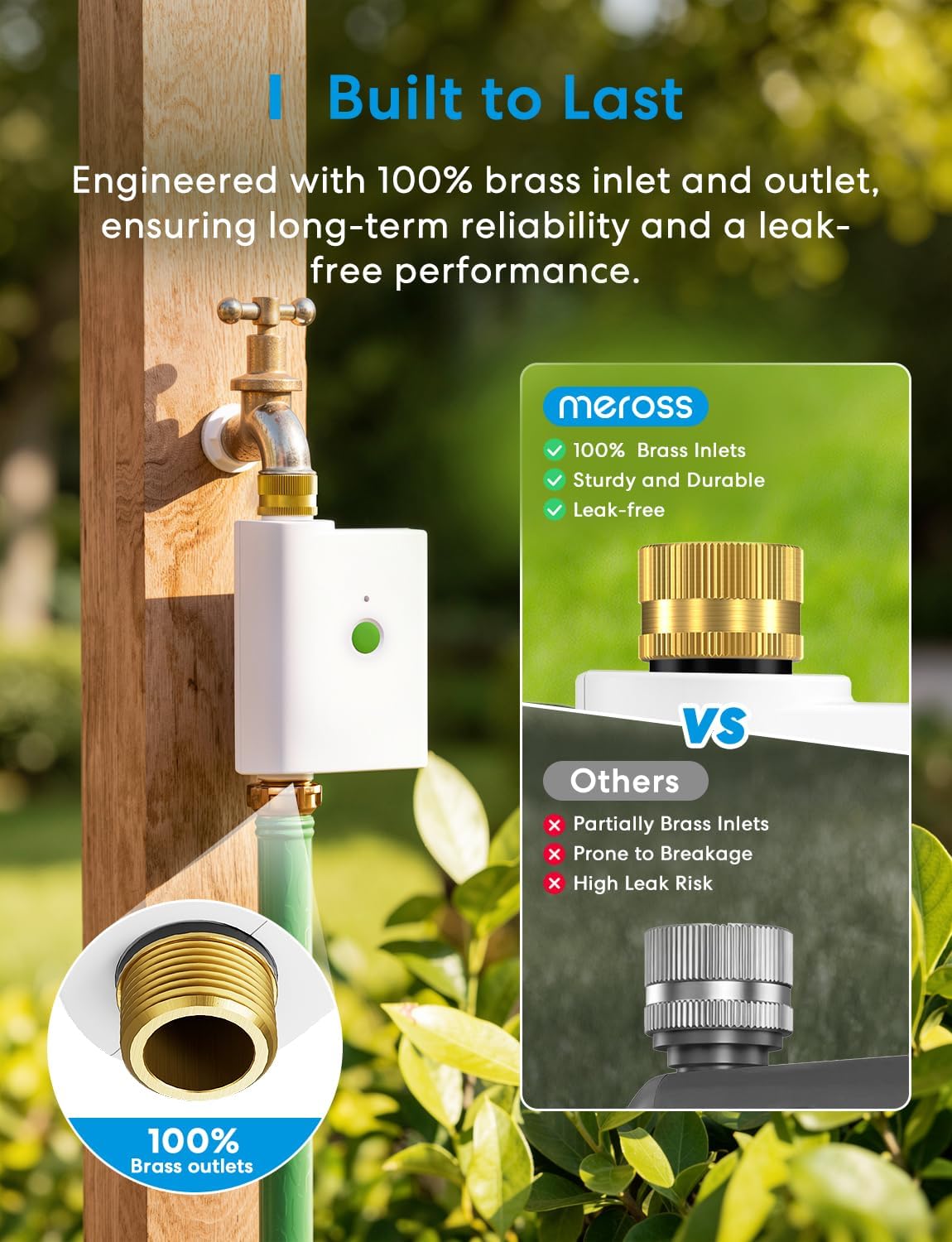
This is the unit that has been flying under the radar, and it deserves explicit attention: the Meross Smart Water Timer is currently the only HomeKit-native smart hose timer in this comparison group. Note that this article addresses the Meross Smart Water Timer by product name only — do not search for it by any alphanumeric code string, as those change with firmware revisions; search “Meross Smart Water Timer HomeKit” to find the current listing.
HomeKit compatibility — Apple’s smart-home framework — means the Meross timer works natively inside the Apple Home app on iPhone and iPad, responds to Siri voice commands, and integrates with HomeKit automations. A representative example: “water the raised beds at sunrise every day unless rain is detected by another HomeKit sensor” — that logic can be configured entirely within the Apple Home app using standard automation tools. For households already running HomeKit devices such as smart locks, lights, thermostats, and environmental sensors, this is a genuine workflow advantage, not a marketing checkbox. You’re not managing a separate app; the timer appears as a native tile in the same Home interface you already use daily.
No other timer in this group offers this. Rachio’s ecosystem integration runs through its own app and voice assistants via third-party bridges; Orbit has its own app; RAINPOINT runs standalone. The Meross is the only one that disappears into an Apple-native smart home without a bridge device or workaround.
This Old House (“How to Install a Hose-Bib Timer,” thisoldhouse.com) notes that the best smart-home integrations are the ones that require the fewest separate apps — and for Apple households, the Meross delivers exactly that single-app experience.
If X, then Y: If your household runs iPhones and you have any other HomeKit devices already, the Meross Smart Water Timer is worth serious consideration regardless of price comparison. HomeKit-native reliability and the single-app experience are worth a meaningful premium over a standalone app that adds fragmentation to your smart-home stack.
Orbit
$77.20
In stock on Amazon
Check price on AmazonRachio Smart Hose Timer
Rachio’s brand equity is built on its weather intelligence. The Rachio 3 controller is recognized by Wirecutter (“The Best Smart Sprinkler Controllers,” wirecutter.com) as a top pick precisely because its weather-skip logic reduces water use in a measurable, documented way. The expectation is that this same intelligence carries into the hose-bib format.
For scheduling sophistication and app polish, it does. The Rachio app experience is genuinely good — cleaner than Orbit’s, more capable than RAINPOINT’s. If you’re already on the Rachio ecosystem, adding a hose timer without learning a second app is a real convenience that shouldn’t be undervalued.
The problem reviewers keep flagging: the battery compartment. Documented owner reviews include at least one detailed account explicitly stating the unit is not waterproof in practice — specifically that water intrudes into the battery compartment during rain or direct hose spray. For a device marketed as an outdoor product that lives on a hose bib 365 days a year, this is a serious gap. The Irrigation Association (“Smart Water Application Technologies Overview,” irrigation.org) notes that outdoor controller durability is a primary factor in long-term system reliability — a component that fails due to water ingress in year one is not a smart investment at any price tier.
If X, then Y: If you’re in a high-rainfall climate, have a hose bib with overhead exposure, or run soaker hoses that occasionally spray back toward the timer, treat this waterproofing concern as a genuine risk, not a theoretical one. Plan to add a protective weatherproof cover (available for $8–$15 at most hardware stores). If you’re in an arid climate with covered bib placement, the risk is lower but still worth monitoring through the first season.
Orbit
$77.20
In stock on Amazon
Check price on AmazonOrbit B-hyve XD 4-Port
The B-hyve XD’s 4-port design is its entire value proposition. Managing four separate drip zones — perennial beds, vegetable garden, potted container row, and a hanging-basket zone — off one manifold and one app account is genuinely attractive. Family Handyman (“Smart Irrigation Controllers Explained,” familyhandyman.com) notes that zone separation is the single largest lever for water efficiency, and a 4-port timer delivers that without underground pipe or professional installation.
Where it earns praise: Owners running the XD as a standalone unit — their only B-hyve device — report high satisfaction. The 4-zone logic works as advertised, scheduling is flexible, and the physical build quality draws consistent positive comments. If 4-zone capability is the requirement, no other device in this comparison group can match it.
Where it creates problems: multi-unit account conflicts. Documented owner reviews describe what happens when a 4-port XD unit is added to an existing account that already manages multiple single-zone B-hyve timers. Scheduling conflicts, app recognition failures, and zone assignment confusion are specifically cited. This is not a fringe edge case — it is the exact scenario a property manager or anyone running a fleet of units will encounter. If you are specifying more than one B-hyve product on the same account, this conflict risk is real and currently underdocumented by Orbit.
The documentation problem is its own issue. Orbit’s official documentation quality is a recurring complaint across long-run reviews. The pattern across aggregated owner feedback is consistent: buyers learn the B-hyve XD primarily through third-party video tutorials rather than the included materials. Searching “B-hyve XD setup” on YouTube yields competent walkthroughs, but depending on unofficial sources to operate a paid product is a friction point worth knowing before you’re standing in a muddy bed at 7am trying to figure out zone assignment.
If X, then Y: If you need 4 zones and this is your first and only B-hyve device, the XD is a strong performer — learn it via video tutorial, not the manual. If you already own other B-hyve timers or plan to grow to a multi-unit fleet on one account, hold off until Orbit documents a clear multi-unit configuration path, or test a single XD unit on its own dedicated account before committing.
Orbit
$129.98
In stock on Amazon
Check price on AmazonFrequently Asked Questions
Is the Rachio Smart Hose Timer actually waterproof enough for year-round outdoor use? Rachio rates the unit for outdoor use, but documented owner reviews include at least one explicit account of water intrusion into the battery compartment during rain exposure. Until Rachio updates the design or publishes a verified IP rating, treat waterproofing as an unresolved concern in high-rainfall regions. A protective timer cover is a reasonable precaution.
Can I run multiple Orbit B-hyve XD units on the same app account without conflicts? At least one detailed owner account documents scheduling conflicts and zone recognition failures when a 4-port XD is added to an account already managing single-zone B-hyve units. Orbit’s documentation does not clearly address mixed-fleet configuration. If you’re managing multiple units, test one new XD on a dedicated account before committing to a full fleet migration.
Do these timers work without WiFi once programmed, if the router goes down? Generally yes — all four devices store schedules onboard and will execute watering programs independently of internet connectivity once programmed. You lose remote access and any weather-skip intelligence, but the valve will still open and close on schedule. Confirm this behavior in the specific firmware documentation before relying on it as a failsafe.
Which smart hose timers are compatible with Apple HomeKit? Among the devices reviewed here, only the Meross Smart Water Timer offers native HomeKit compatibility. Rachio, Orbit B-hyve, and RAINPOINT do not have HomeKit integration as of Q2 2026.
How long do batteries typically last through a full irrigation season? Manufacturer estimates and owner reports consistently cluster around six months under normal use — roughly one irrigation season. Factors that reduce battery life include frequent manual activations, long watering runs, cold temperatures (which reduce battery output), and poor WiFi signal (which forces the radio module to work harder to maintain connection). Reviewers in northern climates report pulling units for winter storage, which effectively resets the battery calendar each spring.
The Buying Decision
Here’s the decision frame, stated plainly:
- You’re deep in the Apple ecosystem → Meross Smart Water Timer. No other choice in this group gives you native HomeKit. Orbit — $77.20
- You need 4 zones from one bib and this is your first B-hyve device → Orbit B-hyve XD 4-Port. Learn it via video tutorial, not the manual. Orbit — $129.98
- You’re already in the Rachio app ecosystem and have covered bib placement → Rachio Smart Hose Timer. Manage the waterproofing risk with a cover. Orbit — $77.20
- You have one zone, marginal WiFi, and a tight budget → RAINPOINT. Honest value, strong range, low-friction setup. meross — $68.99
- You’re speccing multiple timers on one Orbit account → Pause and test a single XD on a clean dedicated account first.
The EPA WaterSense Program (“Watering Tips and Resources,” epa.gov) makes the point plainly: any smart timer that gets used beats any premium timer that sits in a drawer because setup was too complicated. Match the device to your actual situation — climate, zone count, ecosystem, and budget — not to the feature ceiling.