August 25, 2026 • Tomás Guerreiro • 11 min reading time • Specs verified June 18, 2026
Pop-Up Sprinkler Head Selection Guide: Rain Bird 1800 Series Bodies, VAN Nozzles, and Pressure-Regulated Upgrades
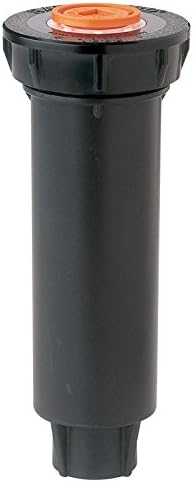
If you’ve ever stood in a big-box store staring at a wall of sprinkler heads wondering why there are a dozen versions of what looks like the same plastic cylinder, you’re not alone. A pop-up sprinkler head is simply a spray device that sits flush with the ground when idle and rises — “pops up” — when the zone pressurizes. The head has two distinct parts: the body (the housing that screws into your lateral pipe and contains the pop-up stem) and the nozzle (the replaceable insert that actually shapes the water pattern). Understanding that those two parts are independent decisions is the single most important concept in this guide. By the time you finish reading, you’ll know which Rain Bird 1800 body fits your situation, how VAN (variable arc nozzle) inserts work, when to swap in a pressure-regulated body, and a handful of field tips that the box instructions quietly skip over.
| EDITOR'S PICKRain Bird 1806VAN 1800 Series P… | Mid-tierRain Bird 1800 Series Pop-Up Sp… | Budget pickRain Bird 1804VAN 1800 Series P… | |
|---|---|---|---|
| Pack size | 5 | 10 | 4 |
| Pop-up height | 6 in | 4 in | 4 in |
| Nozzle included | ✓ | ✗ | ✓ |
| Arc adjustment | 0-360° | — | 0-360° |
| Spray distance | Up to 15 ft | — | Up to 15 ft |
| Inlet size | 1/2 in | — | 1/2 in |
| Price | $44.99 | $29.15 | $26.99 |
| See on Amazon → | See on Amazon → | See on Amazon → |
Why the Body Is a Platform, Not a Product
Here’s the frame that experienced installers use: the nozzle is the variable; the body is the commodity. That insight comes through clearly when you sort through aggregated buyer reviews — the consistent advice from multi-zone DIYers and landscape contractors alike is to buy Rain Bird 1800 bodies in multi-packs without a nozzle included, then source the specific nozzle SKU that matches each zone’s geometry and precipitation-rate requirement.
This matters more than it sounds. On a typical residential install you might have:
- Tight 90° corners along a foundation bed
- Full 180° coverage along a fence line
- 360° coverage in a center-lawn location
- An oddly shaped corner demanding a 210° arc
If you buy pre-assembled heads with fixed nozzles, you end up either over-watering narrow strips (wasting water and promoting disease) or making multiple return trips to swap parts. Buying body-only packs and stocking a selection of nozzles — fixed-arc, VAN, and rotary-style — gives you a single SKU for the rough-in work and maximum flexibility at startup.
The Rain Bird 1800 series has been the default residential spray body for decades, and the installed base is enormous. Per the Rain Bird Corporation’s 1800 Series Installation Guide, the series uses a standard ½-inch female NPT inlet and a standardized nozzle thread that accepts Rain Bird’s full nozzle catalog as well as several competing nozzle families — which we’ll return to shortly.
Choosing Pop-Up Height: The Number Most Buyers Get Wrong
Pop-up height — the distance the nozzle rises above grade when the zone is pressurized — is rated at 2”, 4”, 6”, and 12” across the 1800 line. Most residential lawns with standard cool-season or warm-season turf are served by the 4-inch body (1804). The 2-inch variant is primarily for groundcovers and very low-cut turf; it’s undersized for anything that grows past about 1.5 inches at mow height.
The 6-inch body (1806) is worth a dedicated callout because it solves a real problem that rarely gets documented: areas where the turf is allowed to grow taller between cuts, or where a dense, low-branching ornamental grass borders the spray radius. Reviewers of the 6-inch body specifically note it as the right call when spray needs to clear tall growth without adding a separate swing-pipe extender — a clean solution that saves a fitting, a potential leak point, and a trip back to the supply house.
By the numbers:
| Body Model | Pop-Up Height | Best Use Case |
|---|---|---|
| Rain Bird 1802 | 2 in | Groundcover, very low-cut turf |
| Rain Bird 1804 | 4 in | Standard residential lawn (most common) |
| Rain Bird 1806 | 6 in | Tall turf, ornamental grass borders |
| Rain Bird 1812 | 12 in | Low shrub beds, mulched areas |
The University of California ANR’s Landscape Irrigation Design Manual (UC ANR Publication 21426) reinforces the height-selection logic: water that has to travel through a dense canopy before reaching the root zone delivers meaningfully less moisture than water applied just above it — a small spec decision with a real efficiency outcome.
VAN Nozzles: Flexible Arc Without Flexible Quality
A VAN nozzle — variable arc nozzle — lets you dial the spray arc anywhere from roughly 0° to 360° by turning an adjustment collar, rather than being locked to a fixed arc like a standard 10F (fixed 10-foot, full-circle) nozzle. That flexibility makes them the right choice for irregular lot shapes, oddly angled runs, and anywhere a fixed nozzle would overspray a hardscape or structure.
The field tip that most buyers never find in the box — and that shows up repeatedly when you read through aggregated 1804VAN reviews — is this: always remove the nozzle from the body before rotating the arc adjustment collar. Attempting to adjust the arc while the nozzle is threaded into the body can bind the internal stem mechanism and cause damage to the wiper seal or the ratcheting collar. Pull the nozzle out, set your arc on the benchtop or in your hand, then thread it back in. It takes ten seconds and saves a warranty claim.
Warning: Do not adjust the arc pattern on an installed VAN nozzle while it is threaded into the body under pressure. Reviewers of the Rain Bird pressure-regulated dual-spray heads surface the same caution: forced rotation under load is the most common cause of premature collar failure in the field. Set arc off the head, then install.
VAN nozzles are available in radius increments (typically 8-foot, 10-foot, 12-foot, and 15-foot) and precipitation rates vary accordingly. For matched-precipitation zoning — the practice of using nozzles that apply water at the same inches-per-hour rate across a zone so every head runs the same duration — confirm you’re comparing the same radius within a VAN family, not mixing a 10-foot VAN with a 15-foot fixed nozzle on the same valve.
Pressure-Regulated Bodies: When to Pay the Upgrade Premium
A standard 1800 body passes whatever pressure the lateral line delivers. If your system runs at 70+ PSI at the head — common when a municipal supply is strong and the designer under-sized the pressure loss budget — nozzles will mist rather than spray. Misting droplets are small enough to drift in a light breeze and evaporate before reaching the root zone, driving down distribution uniformity and driving up your water bill.
The pressure-regulated 1800 series bodies (sometimes designated SAM-PRS, for seal-a-matic with pressure-regulating stem) incorporate a pre-set regulator inside the stem that caps delivery pressure at 30 PSI regardless of upstream pressure. Per EPA WaterSense’s technical overview on spray head efficiency and pressure regulation, operating spray heads at manufacturer-recommended pressure — typically 30 PSI for most Rain Bird nozzles — can reduce water use by 6–11% compared to unregulated high-pressure operation, simply by eliminating mist and drift loss.
The tradeoff is real and worth naming: Pressure-regulated bodies cost roughly 30–50% more per head than standard bodies. On a 40-head zone, that’s a meaningful line item. The decision rule is straightforward:
- If your static pressure at the meter is under 60 PSI and you have at least two zones, a standard body with a properly sized nozzle is likely fine — test with a gauge before spending on regulation.
- If your pressure is above 65 PSI at the meter, or you have long lateral runs with minimal pressure drop, the PRS upgrade pays for itself within one to two irrigation seasons in water savings and reduced nozzle wear.
- If you’re in a municipality with tiered water pricing or WaterSense compliance requirements, pressure regulation is the easier path to documentation and rebate eligibility.
The Irrigation Association’s Landscape Irrigation Scheduling and Water Management Best Practices document is explicit: unregulated pressure is one of the top three controllable contributors to residential irrigation overuse, alongside poor scheduling and mismatched precipitation rates.
Hunter MP Rotator Nozzles in Rain Bird 1800 Bodies: The Upgrade Path
Here’s a cross-brand pairing that practitioners in the field consistently confirm works: Hunter MP Rotator nozzles thread directly into Rain Bird 1800 series bodies. The nozzle thread is standardized across most major manufacturers in the residential spray category, and the MP Rotator uses the same ½-inch female inlet geometry as Rain Bird’s own nozzles.
Why does this matter? MP Rotators deliver water through a slow, multi-stream rotating pattern at a precipitation rate of roughly 0.40–0.50 inches per hour — compared to 1.0–2.0+ inches per hour for standard fixed or VAN spray nozzles. That lower application rate dramatically reduces runoff on slopes and clay soils because the water has time to infiltrate. If you’re converting a high-runoff zone — a slope, a heavy clay lawn, an area with compaction — swapping the nozzle family is a zone-level upgrade that doesn’t require touching the pipe.
The precipitation-rate implication you need to plan for: if you put MP Rotators on heads that previously ran fixed spray nozzles, your runtime on that zone needs to roughly double or triple to deliver the same amount of water. Your controller’s schedule will not auto-adjust. Update zone runtimes on the same day you swap nozzles, or you’ll underwater the area for the rest of the season.
Per EPA WaterSense’s spray head efficiency documentation, rotary-style nozzles consistently outperform fixed spray nozzles on distribution uniformity (DU) scores — a measure of how evenly water is applied across the zone — particularly on windy or sloped sites.
Durability: What Long-Run Owners Actually Report
One dimension that spec sheets don’t capture is how the 1800 bodies hold up to the kind of casual mechanical stress that happens on a working residential property. Across aggregated long-run reviews, a pattern surfaces: owners repeatedly note the bodies surviving routine mower contact, foot traffic, and — in one memorable and inadvertent durability testimonial — a reviewer who noted that their dogs hit the heads constantly with no failures over multiple seasons. That kind of anecdotal resilience isn’t a lab certification, but it reflects what landscape professionals already know: the 1800 series has an enormous installed base precisely because it doesn’t require babysitting.
Internal wiper seals — the rubber element that allows the stem to retract cleanly and prevents dirt ingestion — are the most common wear item. Under normal residential use with clean municipal water, most practitioners report the seals lasting five to ten years before replacement is needed. If you’re on well water with sediment, inspect annually. Replacement stems and seal kits are available as separate components, which means a worn seal doesn’t require replacing the entire body and disturbing the lateral connection.
Frequently Asked Questions
Can I use Hunter MP Rotator nozzles in Rain Bird 1800 series bodies? Yes. The nozzle thread is a standardized format shared across most major residential spray head manufacturers. Hunter MP Rotators install directly into any Rain Bird 1800 body. Plan to adjust zone runtimes significantly — MP Rotators apply water at roughly a quarter to half the precipitation rate of standard spray nozzles.
What pop-up height do I need for a typical residential lawn? The Rain Bird 1804 (4-inch pop-up) is the standard choice for lawns maintained at typical residential mow heights of 2–3.5 inches. Step up to the 1806 only if turf is routinely allowed to grow past 4 inches or if a groundcover or ornamental grass borders the spray radius.
How do I adjust the arc on a VAN nozzle without damaging it? Remove the VAN nozzle from the body first. Set the arc by turning the adjustment collar while the nozzle is in your hand or on a flat surface. Thread it back into the body after the arc is set. Adjusting under pressure while the nozzle is installed risks binding the collar and damaging the wiper seal mechanism.
What is the difference between a standard 1800 body and a pressure-regulated body? A standard body passes full line pressure to the nozzle. A pressure-regulated body (SAM-PRS) contains an internal regulator that limits delivery to approximately 30 PSI, regardless of upstream pressure. The PRS version reduces misting and drift at high-pressure sites and is a prerequisite for WaterSense compliance in many municipalities.
How often do the internal seals on 1800 series heads need replacement? On municipal water with typical residential traffic, most long-run owners report five to ten years before seal replacement becomes necessary. Well water with sediment or high iron content can accelerate wear — inspect annually in those conditions. Replacement seal and stem kits are available as components so the body itself doesn’t need to be excavated.
Buying Decision: If X, Then Y
- If you’re installing more than six heads: Buy body-only packs and source nozzles separately. The nozzle is the variable; don’t pay for a fixed nozzle attached to every body when half your corners will need a different arc.
- If your zone includes a slope or clay soil: Swap to Hunter MP Rotators in your 1800 bodies. Confirm you update runtimes the same day.
- If your meter pressure tests above 65 PSI: Specify pressure-regulated 1800 bodies (SAM-PRS). The efficiency math favors the upgrade within the first season on tiered water rates.
- If turf is maintained tall or borders ornamental grass: Spec the 1806 body before considering swing-pipe extenders. It’s a cleaner solution with one fewer connection point.
- If you’re doing a multi-nozzle install: Stock a mix of fixed-arc nozzles for the clean geometries and VAN nozzles for the irregular spots. A single body SKU, two nozzle families — that’s the toolkit.