August 21, 2026 • Tomás Guerreiro • 11 min reading time • Specs verified June 18, 2026
Rain Bird 1800 Series Pop-Up Heads Decoded: 4-Inch vs. 6-Inch Bodies, VAN Nozzles, and When to Upsize the Riser
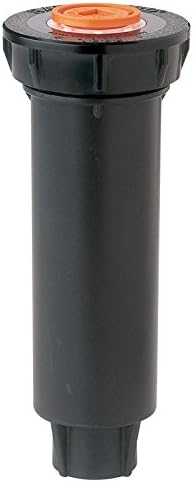
If you’ve ever ordered a box of Rain Bird 1800 sprinkler heads and opened it to find blank bodies with no nozzles, you’re not alone — and you didn’t get a bad batch. A pop-up sprinkler head is made of two distinct parts: the body (the plastic housing that sits in the ground and extends upward when the zone runs) and the nozzle (the interchangeable insert that controls arc, radius, and flow). Rain Bird ships them separately on purpose. Understanding that one distinction — body vs. nozzle — is the single most clarifying idea in this entire article, and everything else flows from it. Whether you’re refreshing a 10-year-old system, spec’ing a new multi-zone lawn layout, or trying to figure out why your heads barely clear the turf, this guide will walk you through the Rain Bird 1800 series from the ground up: which body height to choose, which nozzles pair with which situations, and when you need a longer riser instead of a bigger body.
| EDITOR'S PICKRain Bird 1806VAN 1800 Series P… | Mid-tierRain Bird 32SA/4PKS Simple Adju… | Budget pickRain Bird 32SA Simple Adjust Ge… | |
|---|---|---|---|
| Body height | 6 in | — | — |
| Spray distance | Up to 15 ft | 19–32 ft | 19–32 ft |
| Arc adjustment | 0–360° | 40–360° | 40–360° |
| Connection size | 1/2 in | — | — |
| Pack quantity | 5 | 4 | 1 |
| Price | $44.99 | $37.08 | $11.36 |
| See on Amazon → | See on Amazon → | See on Amazon → |
Why the Bodies Ship Without Nozzles — and Why That’s Actually a Feature
The most common one-star complaint in aggregated reviews of the Rain Bird 1804 10-pack is some variation of “nozzles not included.” Long-term owners, on the other hand, consistently call this a versatility feature, not an oversight — and they’re right.
Here’s the logic: a single irrigation zone might include heads covering a narrow strip along a fence (15-foot radius, 90-degree arc), a wide-open lawn panel (15-foot radius, 180-degree arc), and a tight corner (10-foot radius, 270-degree arc). If bodies came pre-fitted with identical nozzles, you’d be fighting the geometry of your yard rather than designing around it. Selling bodies separately means one 10-pack of 1804 bodies can serve a whole zone using three or four different nozzle types — all installed on identical housings, all interchangeable in the field.
Rain Bird’s own published documentation for the 1800 series explicitly frames the nozzle thread as a universal interface, accepting their full library of fixed-spray, variable-arc (VAN), and R-VAN rotary-strip nozzles. Per the Rain Bird 1800 Series Fixed Spray Head Specification Sheet (2024), the threaded inlet accepts any nozzle from the 1800 series library with a quarter-turn lock.
The practical takeaway: order your bodies in a 10-pack for unit-price economy, then order nozzles separately based on your zone layout. For a mature system refresh — which is exactly the use case long-term owners call out — the 10-pack also makes economic sense because seals wear at similar rates across heads installed at the same time, so you’re replacing everything in one pass rather than hunting down single-head failures over three seasons.
4-Inch vs. 6-Inch Body: The Decision Is About Pop-Up Height, Not Nozzle Performance
The “04” and “06” in Rain Bird 1804 and 1806 refer to pop-up height in inches — meaning how far the head extends above grade when the zone is pressurized. The nozzle performance (arc, radius, precipitation rate) is identical between the two bodies when fitted with the same nozzle.
So which body height do you actually need?
Choose the Rain Bird 1804 (4-inch) when:
- Your turf is maintained at 1–2 inches (standard cool-season or bermuda lawns mowed regularly)
- You’re installing in a bed or groundcover zone where foliage is low and predictable
- You’re retrofitting heads in an existing trench system built around 4-inch pop-up geometry
Choose the Rain Bird 1806 (6-inch) when:
- Your turf runs tall between mowing cycles — fescue, buffalo grass, or any lawn where the blade height routinely exceeds 2–3 inches
- You have a corner installation where you need 270-degree arc clearance and tall grass is obstructing the lower spray pattern
- You’re installing on a slope where the grade change creates an effective tilt that shortens the functional pop-up height on the downhill side
Reviewers consistently note that the 1806’s extra 2 inches solves a real problem: a head that pops up into grass canopy delivers a fractured pattern and underperforms on radius. Per the Irrigation Association’s Landscape Irrigation Scheduling and Water Management guide (2022), nozzle obstruction is one of the three leading causes of distribution uniformity failure in residential systems — and most of it happens at the head level, not the valve or controller level.
One owner note that aggregates across reviews: the 1806 with its 270-degree arc capability and the spray-radius control ring (a simple mechanical collar on the nozzle, turned by hand, no tools) makes tight-corner coverage genuinely tool-free to adjust after installation. That matters when a landscaper is trimming near the head and bumps the collar — you can re-tune on the spot without a screwdriver.
VAN Nozzles vs. Fixed-Spray: Choosing Your Pattern
The Rain Bird 1800 series accepts three main nozzle families. Here’s how they break down:
Fixed-Spray Nozzles (e.g., Rain Bird 15A, 10H, 8-Q)
The letter-number code tells you radius and arc. 15A = 15-foot radius, full circle (360°). 10H = 10-foot radius, half circle (180°). 8-Q = 8-foot radius, quarter circle (90°). Fixed-spray nozzles deliver excellent distribution uniformity and are the right choice for rectangular zones with predictable geometry.
VAN (Variable Arc Nozzle)
The VAN nozzle — the Rain Bird 1800-VAN line — covers any arc between 0° and 360°, adjustable with a small flathead screwdriver at the top of the nozzle body. This is the right tool for irregular shapes: odd-angle corners, trapezoidal strips, zones where a fixed arc would overspray onto hardscape. The trade-off is slightly lower distribution uniformity compared to a matched fixed-spray nozzle.
The radius control ring on VAN nozzles (the ribbed outer collar) lets you reduce throw distance by up to 25% without changing pressure — a real-world advantage when you’re trying to avoid puddling at the edge of a bed or keep water off a wall. Reviewers rate this as one of the most-used features on installed systems, particularly in beds adjacent to structures.
R-VAN Rotary Nozzles
The Rain Bird R-VAN is a rotary strip nozzle that threads into the same 1800 body but changes the delivery physics entirely. Instead of a fixed spray sheet, it delivers slow-rotating streams — closer to a gear-drive rotor’s behavior — at a precipitation rate of roughly 0.4–0.6 inches per hour (per Rain Bird’s published R-VAN spec sheet). That’s about one-third the application rate of a typical fixed-spray nozzle.
Why does precipitation rate matter? Per the EPA WaterSense Best Practices documentation, most soils can only absorb 0.5–0.75 inches of water per hour before runoff begins. Standard fixed-spray heads can deliver 1.5+ inches per hour, which is why you see puddles on slopes and clay soils. R-VAN nozzles on 1800 bodies solve this without replacing the body — and owners running R-VAN nozzles report zero failures and zero runoff even on challenging installs. One long-run review cluster specifically calls out 16-head arrays running R-VAN nozzles with zero failures even in high-traffic areas — including documented dog interference — citing the robustness of the stainless steel retraction spring and wiper seal combination.
By the Numbers: 1804 vs. 1806 vs. R-VAN Quick Reference
| Spec | 1804 Body | 1806 Body | With R-VAN Nozzle |
|---|---|---|---|
| Pop-up height | 4 inches | 6 inches | Same as body chosen |
| Recommended turf height | ≤ 2 inches | ≤ 4 inches | Same as body chosen |
| Precip rate (fixed-spray) | ~1.5 in/hr | ~1.5 in/hr | 0.4–0.6 in/hr |
| Arc adjustment | At nozzle | At nozzle | At nozzle |
| Body + nozzle sold together? | No (body only) | No (body only) | No (nozzle separate) |
When to Add a Riser Instead of Upsizing the Body
A riser is a threaded pipe extension — typically 3, 6, or 12 inches — that installs between the lateral pipe and the head body to raise the entire head above grade. If your 1806 is still getting swallowed by tall ornamental grasses or a raised bed planting, a threaded swing-joint riser is the next move.
This Old House’s sprinkler system installation guide notes that riser height is the most overlooked variable in head placement — most installers set it once at installation and never revisit it as plantings mature. The practical rule: the nozzle should clear the tallest surrounding vegetation by at least 2 inches when fully extended. If your 1806 at 6 inches isn’t clearing, add a riser; don’t skip to a gear-drive rotor just because the head seems undersized.
Frequently Asked Questions
Why do the Rain Bird 1804 and 1806 body packs ship without nozzles, and which nozzles should I order alongside them?
Bodies and nozzles are sold separately so you can match each head’s throw pattern and arc to the actual geometry of that spot in your zone. For a standard lawn zone with defined edges, pair fixed-spray nozzles (matching radius and arc to your head spacing). For irregular beds or corners, use VAN nozzles. For clay soils or slopes with runoff problems, add R-VAN nozzles to the same bodies.
When should I choose a 6-inch pop-up body over a 4-inch body?
Choose the 1806 when your turf regularly exceeds 2 inches in height between mowing cycles, when the installation is on a slope that effectively reduces pop-up clearance, or when a corner placement needs a 270-degree arc without spray blockage from taller surrounding plants.
Can I mix Rain Bird 1800 fixed-spray heads with gear-drive rotors like the Rain Bird 32SA on the same valve zone?
No — and this is one of the most common zone-logic errors in residential systems. Fixed-spray heads and rotary gear-drive heads have dramatically different precipitation rates (roughly 1.5 in/hr vs. 0.5 in/hr). Putting them on the same zone means one type is always getting too much or too little water. The Irrigation Association’s scheduling guidelines are unambiguous on this: matched precipitation rate within a zone is foundational. Run them on separate valves.
How do I adjust the arc on a VAN nozzle once the head is installed?
Turn on the zone so the head is extended and under pressure. Use a small flathead screwdriver inserted into the arc-adjustment slot at the top center of the nozzle body — turn clockwise to reduce arc, counterclockwise to increase it. Most VAN nozzles have a tactile stop at 0° and at 360°. For radius reduction, rotate the outer ribbed collar by hand (no tools) to shorten the throw by up to 25%.
What does the orange threaded cap that ships with 1800 bodies do, and when do I remove it?
The orange cap is a shipping plug that protects the threaded nozzle inlet during transport and storage. Remove it before installing your chosen nozzle. Some installers keep the orange cap on a spare body as a zone-shutoff tool — threading it on a head that’s being temporarily decommissioned keeps debris out of the body during construction or replanting.
How often should I expect to replace pop-up head seals in an established system?
Per aggregated owner reports across long-run reviews, wiper seals in well-maintained systems typically last 7–12 years under normal use — but UV exposure, water quality (hard water accelerates seal degradation), and physical damage from mowing and foot traffic compress that timeline. One practical signal: if you notice a head that won’t retract fully after the zone shuts off, the wiper seal is the first suspect. Ordering a 10-pack of bodies for a mature system refresh makes sense because heads installed in the same original run tend to wear on similar timescales.
Buying Decision: If X, Then Y
- If your lawn is standard height and your zone geometry is simple rectangles: Rain Bird 1804 bodies + matched fixed-spray nozzles. Order the 10-pack for economy and buy nozzles in the arc/radius combinations your layout needs.
- If your turf runs tall, you have corner coverage problems, or you’re on a slope: Rain Bird 1806 bodies. Same nozzle selection logic applies.
- If you have clay soil, a slope, or any zone where you’ve seen runoff or puddling: Rain Bird 1804 or 1806 bodies + R-VAN nozzles. The lower precipitation rate is the fix.
- If your heads still aren’t clearing vegetation after choosing the right body height: Add threaded swing-joint risers before considering a rotor upgrade. It’s a $2 fix before a $30 one.
- If you’re refreshing a mature system: The 10-pack body format makes lifecycle sense — buy once, replace the full zone in one session, and start the seal clock fresh across all heads simultaneously.
The Rain Bird 1800 series has earned its reputation not because it’s exotic hardware, but because it’s a stable, well-documented platform where the nozzle selection logic is transparent and the parts are interchangeable across decades of production. That modularity is the point. Get the body height right, get the nozzle matched to your soil and geometry, and this is a system that won’t ask for your attention again for a long time.