September 5, 2026 • Tomás Guerreiro • 11 min reading time • Specs verified June 18, 2026
Rachio 3 vs. Orbit B-hyve 12-Zone: Which Smart Controller App Actually Delivers in Year Two

A smart irrigation controller is the brain of your sprinkler system — the device mounted on your garage wall or in a weatherproof exterior box that decides when to water, for how long, and, critically, when not to bother because rain already handled it. The upgrade from a basic dial timer to a smart controller typically means your system can check local weather data and skip a scheduled cycle automatically. That one feature is why the EPA WaterSense Program, in its “Outdoor Water Use in the United States” overview published at epa.gov, estimates that smart controllers can reduce outdoor irrigation by up to 15 percent compared to conventional clock-based timers. This article compares two of the most-discussed options in that category — the Rachio 3 and the Orbit B-hyve 12-zone — not from an unboxing perspective, but from the angle that actually matters: how does each one perform 12, 18, and 24 months in, when the novelty has worn off and you’re trusting it to manage your landscape without constant babysitting?
If you’re already past the “what is a smart controller” stage and you’re deciding between these two for a serious install — or reconsidering one you already own — this is the breakdown you need.
The Core Promise Both Controllers Make (And Where They Diverge)
Both the Rachio 3 and the Orbit B-hyve 12-zone ship with the same elevator pitch: connect to WiFi, download the app, stop hand-programming a dial, and let weather intelligence do the heavy lifting. At that surface level, both deliver. Owners of both units consistently identify remote access — running a zone from a phone while standing in the backyard, or verifying a system ran correctly from across the country — as the single biggest quality-of-life upgrade over a dumb timer. That part is not in dispute.
The divergence starts in how each controller interprets “weather intelligence,” and it compounds over time.
How the Rachio 3 Handles Weather
The Rachio 3 uses a system Rachio calls Weather Intelligence Plus, which pulls hyperlocal data from a network of personal weather stations and cross-references it against site-specific inputs you provide during setup: soil type, slope, sun exposure, and the type of vegetation planted in each zone. This matters because a clay-soil slope in afternoon sun behaves completely differently than a flat, sandy bed in morning shade — the same inch of rainfall doesn’t soak in at the same rate, and the scheduling engine accounts for that distinction. The Family Handyman “Best Smart Sprinkler Controllers” review guide explicitly identifies this depth of zone-by-zone customization as the feature most likely to separate Rachio from simpler smart controllers in real-world use. Owners who run varied landscapes — drip beds on one side, turf on another — consistently report that the system makes meaningfully different decisions for each zone based on those inputs, rather than treating the whole yard as a single watering unit.
Rachio
$249.00
In stock on Amazon
Check price on AmazonHow the B-hyve 12-Zone Handles Weather
The B-hyve’s weather response is simpler and, depending on your perspective, either refreshingly straightforward or frustratingly blunt: it checks forecast data and triggers a delay if rain is predicted. This works well in climates where forecasts are reliable and your landscape is established enough to tolerate an occasional skipped cycle. Where it becomes a recurring long-term owner complaint is when the system delays a scheduled run based on a forecast that doesn’t verify — rain was predicted, the run was skipped, and the rain never came. For established turf in a temperate zone, that’s a minor annoyance. For newly seeded areas or drought-sensitive plantings, it can matter more than the spec sheet suggests.
The Irrigation Association’s “Smart Controller Performance Testing” research summary, published at irrigation.org, identifies forecast-only weather delay logic as a meaningful performance variable in controller evaluations, noting that verification-based systems — those that confirm whether precipitation actually fell — consistently outperform forecast-only systems in water-use accuracy over a full season.
Orbit
$117.39
In stock on Amazon
Check price on AmazonNo-WiFi Operation: The Hardware Differentiator
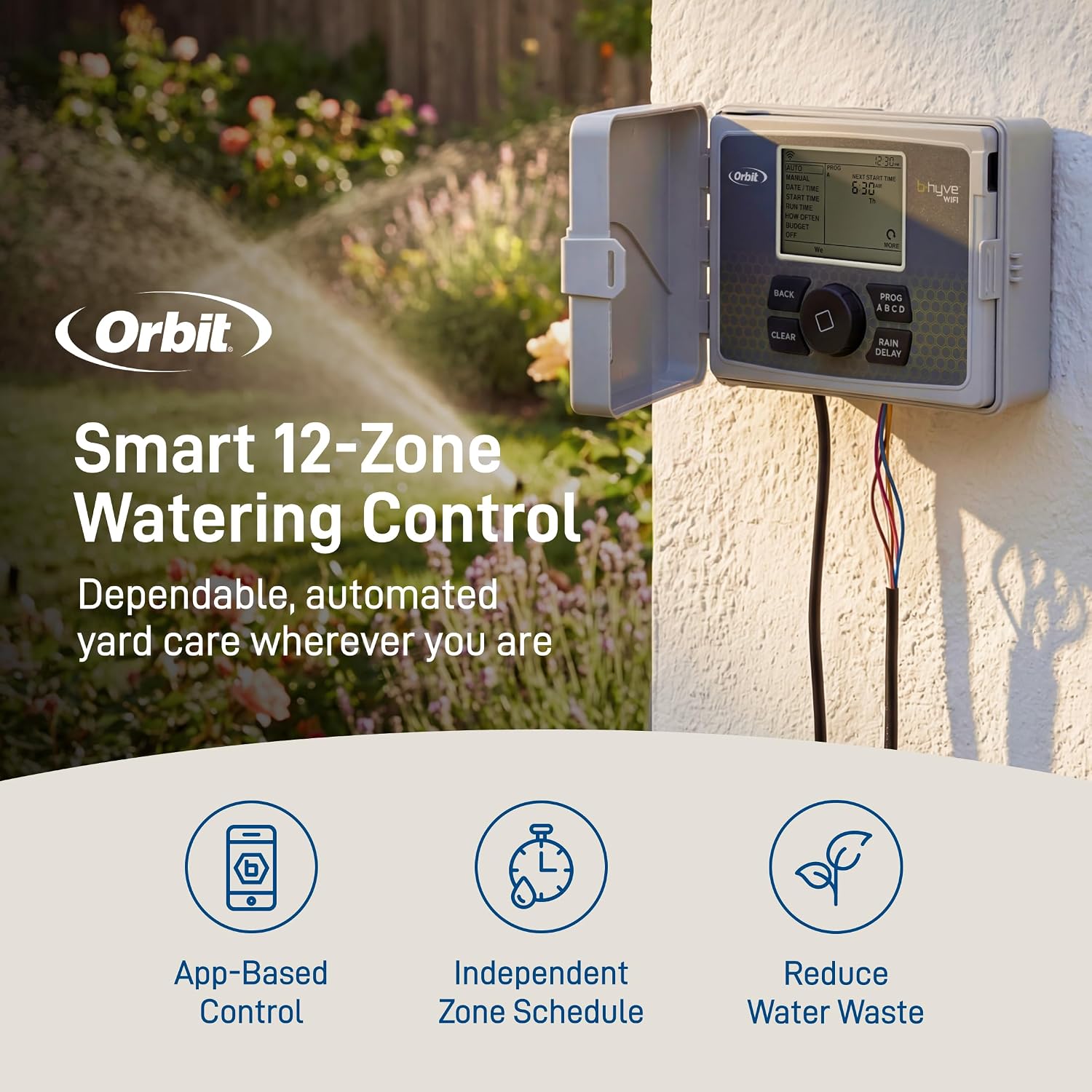
The B-hyve 12-zone includes a physical LCD screen with on-device controls that allow full manual programming without any app or WiFi connection. If your router goes down, gets replaced, or your household changes internet providers — all things that happen over a two-to-three year horizon — the B-hyve can still be operated directly from the wall. The Rachio 3 has no comparable on-device programming capability; if the app is inaccessible, advanced scheduling is inaccessible. This Old House’s “Best Smart Sprinkler Controllers” buyer’s guide identifies the physical interface as a key differentiator for households where more than one person may need to operate the system, noting it becomes more valuable over time rather than less — the original installer is typically the only person who interacted with the device in year one, but that changes.
Rachio
$35.99
In stock on Amazon
Check price on AmazonYear-Two Reliability: App Behavior, Firmware, and the Subscription Question
Here is where the comparison gets financially concrete, and where buyers most often report being surprised in retrospect.
Rachio 3 has no subscription requirement for weather-based skips. The core intelligence — weather skips, flex daily scheduling, and seasonal adjustments — is fully functional on the free tier. There is an optional paid advisory layer that adds coaching content and some additional analytics, but owners consistently report that the free weather skip functionality works completely without it. The Irrigation Association’s smart controller research notes that subscription-gated weather intelligence is a meaningful total-cost-of-ownership variable that buyers frequently underestimate at purchase time — a point that works in Rachio’s favor here, since the feature that justifies the purchase is not locked behind a paywall.
B-hyve 12-zone operates on a fully free model with no paid tiers at all. Remote access, weather delays, scheduling — all free, indefinitely, with no monetization layer to worry about. If avoiding any subscription exposure is your primary driver, B-hyve wins this category by default.
The tradeoff is sophistication ceiling. B-hyve’s app is more approachable for a less technical household member but tops out at a lower level of customization. Rachio’s app has a steeper learning curve on first setup — soil type dropdowns and slope inputs require thought — but once configured, owners report it runs correctly with minimal intervention.
Zone Architecture and the Multi-Unit Question
If your system has more than 12 zones (B-hyve’s ceiling for this model) or more than 16 zones (Rachio 3’s 16-zone ceiling), you’re in multi-controller territory. This comes up more often than it should, because homeowners frequently undercount zones during planning — a failure point noted repeatedly in irrigation design literature.
Rachio’s Dual-Unit App Management
Two Rachio 3 units can be managed under a single app account. The app presents both controllers together, allowing you to view and run zones from either unit without logging in and out. This is a meaningful architectural advantage for systems that have grown past 16 zones organically, or for a landscaper managing a property that genuinely needs 20 to 22 zones. The unified interface is not cosmetic — it allows zone sequencing and scheduling decisions across both controllers from a single screen.
Rachio
$249.00
In stock on Amazon
Check price on AmazonB-hyve Multi-Unit Limitations
Multi-unit management under a single B-hyve login is technically possible, but the experience is less integrated. You are essentially managing two separate devices that happen to share an account rather than interacting with a unified system view. For a light-commercial operator toggling between zones during a site visit, this distinction matters. For a single-property homeowner whose system fits within 12 zones, it is irrelevant.
Orbit
$117.39
In stock on Amazon
Check price on AmazonThe Physical Hardware Tradeoffs That Compound Over Time
Software gets most of the attention in smart controller reviews, but hardware decisions accumulate over a multi-year install in ways that first-year reviews don’t capture.
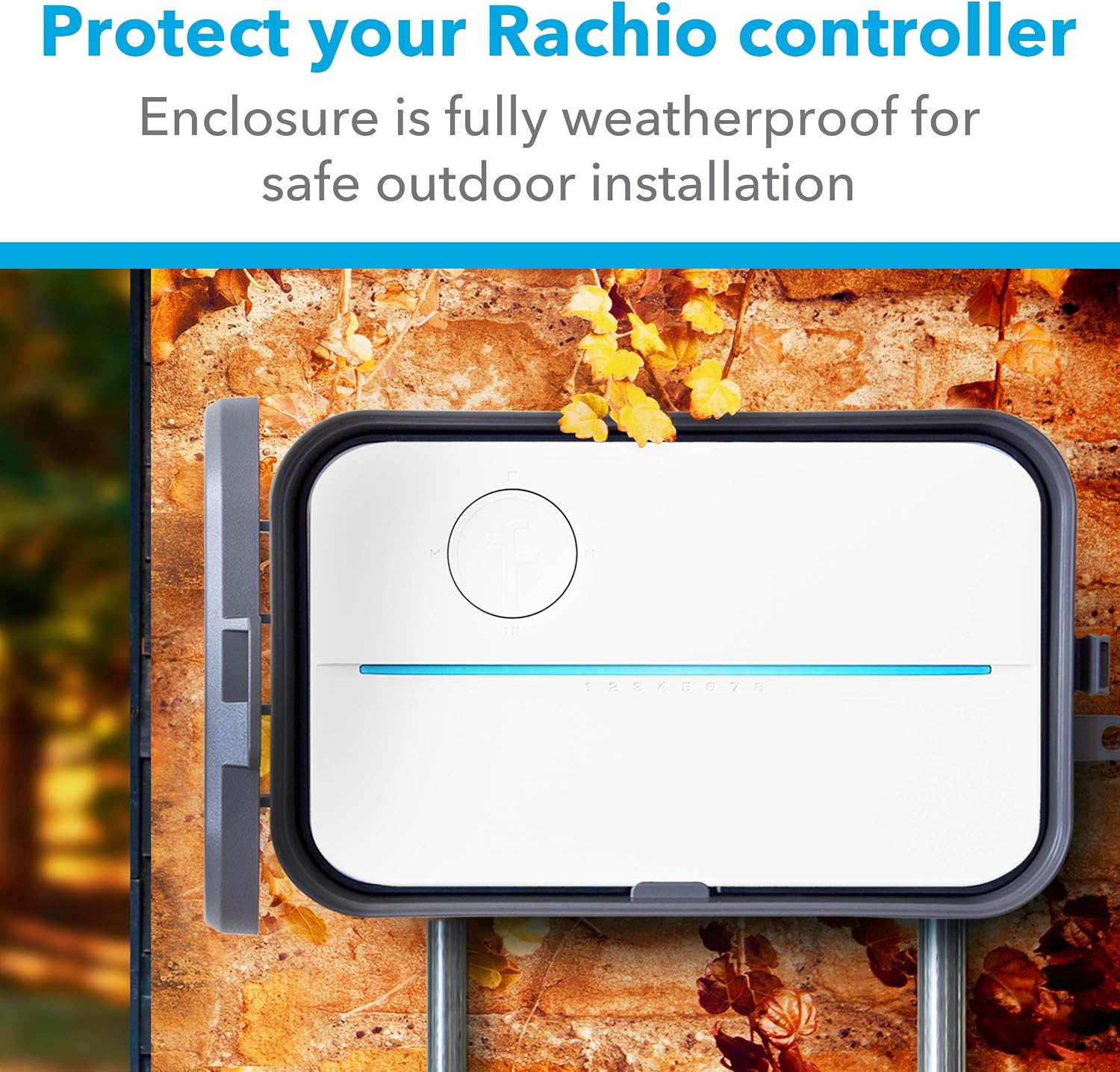
The Rachio 3 outdoor enclosure is frequently praised among owners who install the controller in a garage-exterior or utility-area mount — the fit and finish earn consistent positive marks. One recurring owner note worth flagging before purchase: the power cord exits from the back of the enclosure, adding wall-depth that is not always apparent in product photography. If your mounting location has nearby conduit, a hose bib, or a shallow overhang, the clearance required behind the enclosure can be tighter than anticipated. Measure your specific location before committing. This is a pre-installation planning detail, not a dealbreaker, but it surfaces repeatedly in owner accounts precisely because product photos don’t convey it.
The B-hyve’s physical LCD screen, discussed above in the context of WiFi-independent operation, also earns marks as a trust-building feature when system management is handed off to a spouse, a property manager, or a tenant. Family Handyman’s smart controller review guide notes that ease of physical operation — independent of smartphone comfort level — is one of the clearest differentiators between the two product philosophies and becomes more relevant as the household of a property changes over a multi-year ownership window.
Rachio
$35.99
In stock on Amazon
Check price on AmazonIf X, Then Y: The Decision Rule
You’re past the feature list. Here is the direct call, organized by scenario.
If your system is under 12 zones, your household has more than one person who may need to operate it, and “the WiFi went down” is a realistic scenario: buy the B-hyve 12-zone. The physical screen is a genuine operational fallback that the Rachio cannot match, and for a simpler install without heavy soil and slope complexity, B-hyve’s weather delay logic will serve adequately. The zero-subscription model eliminates any future cost-of-ownership uncertainty.
If your system has varied zones — turf at one end, drip beds on a slope at the other, full-sun exposure on one side — and you want the controller to account for that variation in its scheduling logic: buy the Rachio 3. The soil, slope, and sun inputs are not marketing theater. Owner experience consistently shows the system makes meaningfully different decisions based on those inputs, and that is the feature that earns its keep in year two when you have stopped thinking about the controller at all.
If you are a light-commercial operator or property manager running multiple zones across a larger property: Rachio 3’s dual-unit single-app management gives you a cleaner operational picture, and the no-subscription weather intelligence eliminates the recurring cost variable that has affected buyers on other platforms.
If cost-of-ownership transparency is your primary driver: both controllers have zero subscription exposure for core weather features. That is the honest answer, and it is worth stating plainly.
Frequently Asked Questions
Does the Rachio 3 require a subscription for weather-based skips? No. Weather Intelligence Plus — including automatic weather skips and flex daily scheduling — is fully functional on Rachio’s free tier. There is an optional paid advisory service, but the core weather intelligence runs without it.
Can the B-hyve 12-zone be programmed without the app if WiFi goes down? Yes. The B-hyve has a physical LCD screen and on-device controls that allow full manual programming independent of WiFi or the app. This is a meaningful operational advantage over Rachio for households where app access cannot be guaranteed.
How does the Rachio outdoor enclosure affect wall-mount depth? The power plug exits from the back of the enclosure, adding wall-depth that product photos don’t always convey. Before mounting, measure clearance from your chosen location to nearby obstructions — conduit, hose bibs, overhangs — to confirm the enclosure will sit without interference.
Will the B-hyve weather delay fire if rain is only forecast but never falls? Yes, and this is one of the most-cited long-term owner complaints. B-hyve’s weather delay logic is forecast-driven, not verification-driven. If rain is predicted and then doesn’t materialize, the system will have already skipped a scheduled run. In most established landscapes this is a minor inconvenience; in drought-sensitive or newly planted areas, it warrants manual monitoring during dry periods.
Can two Rachio 3 units be managed in a single app for systems over 16 zones? Yes. Rachio supports managing two units under a single app account, presenting both controllers in a unified interface. This is the recommended path for systems that have grown beyond 16 zones.
Which controller is easier to hand off to a less tech-savvy household member? The B-hyve, by a meaningful margin. The physical on-device screen allows someone uncomfortable with apps to operate the system directly from the wall. As noted in the Family Handyman “Best Smart Sprinkler Controllers” guide, this physical-interface advantage is one of the clearest product-philosophy differentiators between the two brands and becomes more practically relevant as household members change over a multi-year ownership window.