August 17, 2026 • Tomás Guerreiro • 11 min reading time • Specs verified June 18, 2026
Preassembled Valve Manifolds vs. Hunter PGV Slip Manifold: Which Build Strategy Saves Time and Survives the Long Haul
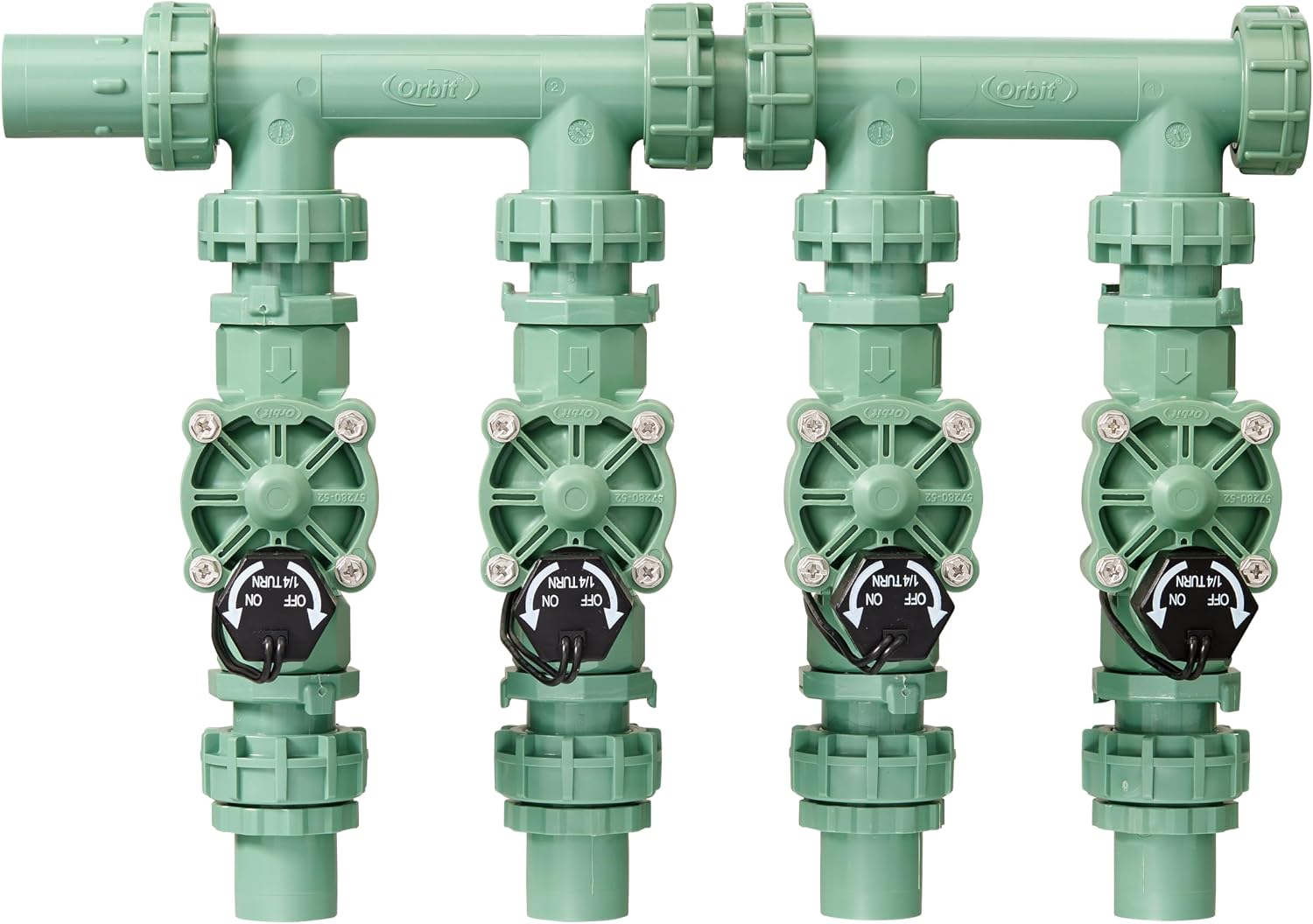
Imagine you’ve just gotten a contractor quote to install a new sprinkler manifold — the central hub where all your individual zone valves live together in one tidy assembly — and the number comes back at $2,000. That’s a real figure that shows up repeatedly in homeowner project accounts, and it’s exactly the kind of sticker shock that sends people down the DIY path. A valve manifold is simply a plumbing arrangement that groups multiple solenoid valves (the electrically controlled gates that open and close water flow to each zone) onto a shared inlet, reducing fittings, leak points, and box space. There are two dominant strategies for building one: buy a preassembled manifold (like the Orbit 3- or 4-valve models) that arrives ready to wire and glue, or construct your own from individual Hunter PGV valves mounted on a slip manifold body. This article breaks down which approach makes more sense depending on your situation — and shows the math that drives the decision.
| EDITOR'S PICKHunter PGV101-MM 4 Zone Dura Ma… | Mid-tierNDS 117BC* 15 in. X 22 in. Rect… | Budget pickOrbit 57184 Double Union Couple… | |
|---|---|---|---|
| Zones | 4 | — | — |
| Connection | Slip | — | Swivel |
| Flow control | ✓ | — | — |
| Box included | — | ✓ | — |
| Box size | — | 15 x 22 in. | — |
| Box height | — | 12 in. | — |
| Price | $157.84 | $52.83 | $4.97 |
| See on Amazon → | See on Amazon → | See on Amazon → |
The Core Tradeoff: Speed vs. Long-Term Configurability
The preassembled vs. build-your-own debate isn’t really about which is better in the abstract. It’s about what you’re optimizing for: installation speed and simplicity on one end, component-level repairability and upsizing flexibility on the other.
Preassembled manifolds (Orbit’s 3-valve and 4-valve units being the most widely reviewed in this category) ship as a single molded plastic body with valves already attached. You glue one inlet, run your zone lines out the outlets, wire the solenoids, and you’re essentially done. No slip-joint dry-fitting, no wondering if you over-tightened a union. The Irrigation Association’s publication Landscape Irrigation Scheduling and Water Management (2014 edition) identifies manifold leak points as the most common source of in-ground water loss in residential systems — and factory-assembled bodies eliminate the most failure-prone joints by design.
Hunter PGV valves on a slip manifold take longer to assemble. You’re threading or cementing individual valves onto a manifold rail, running individual wires, and managing more connection points. But what you gain is modularity: each valve is a discrete serviceable unit, PGV replacement parts are stocked at virtually every irrigation supply house, and you can mix flow rates or add a zone without replacing the whole assembly.
The $2,000 contractor quote framing is useful here. A 4-valve Orbit preassembled manifold plus a compatible valve box runs well under $150 in parts. A 4-zone Hunter PGV build on a slip manifold, including the manifold body, individual valves, and fittings, lands in the $180–$260 range depending on valve size. Either way, the materials cost is a fraction of the labor quote — which is precisely why this audience is here.
Head-to-Head Comparison: Three Buyer Profiles
H3: The Weekend DIYer Installing a 3- or 4-Zone Residential System
For a homeowner who wants the fastest path from parts to a working system, the Orbit preassembled manifold wins on nearly every dimension that matters at this scale. The inlet and outlets use standard slip-fit PVC cement connections — no threading required on the manifold body itself. Solenoid wiring is straightforward, with each valve carrying a labeled common and hot lead. Installation time in aggregated owner accounts runs 45 to 90 minutes for a 4-zone assembly, compared to 2 to 3 hours for a Hunter PGV slip build.
Durability data from owner documentation — including one account covering approximately 1,000 solenoid actuations across three years on a 4-zone system — shows the manifold body and valve seats holding up cleanly. The single failure in that documented run was one solenoid coil, replaced in isolation without pulling the manifold. Individual solenoids on Orbit manifold valves are replaceable without disturbing the body — a detail that matters enormously when evaluating total cost of ownership versus replacement-as-a-unit assumptions.
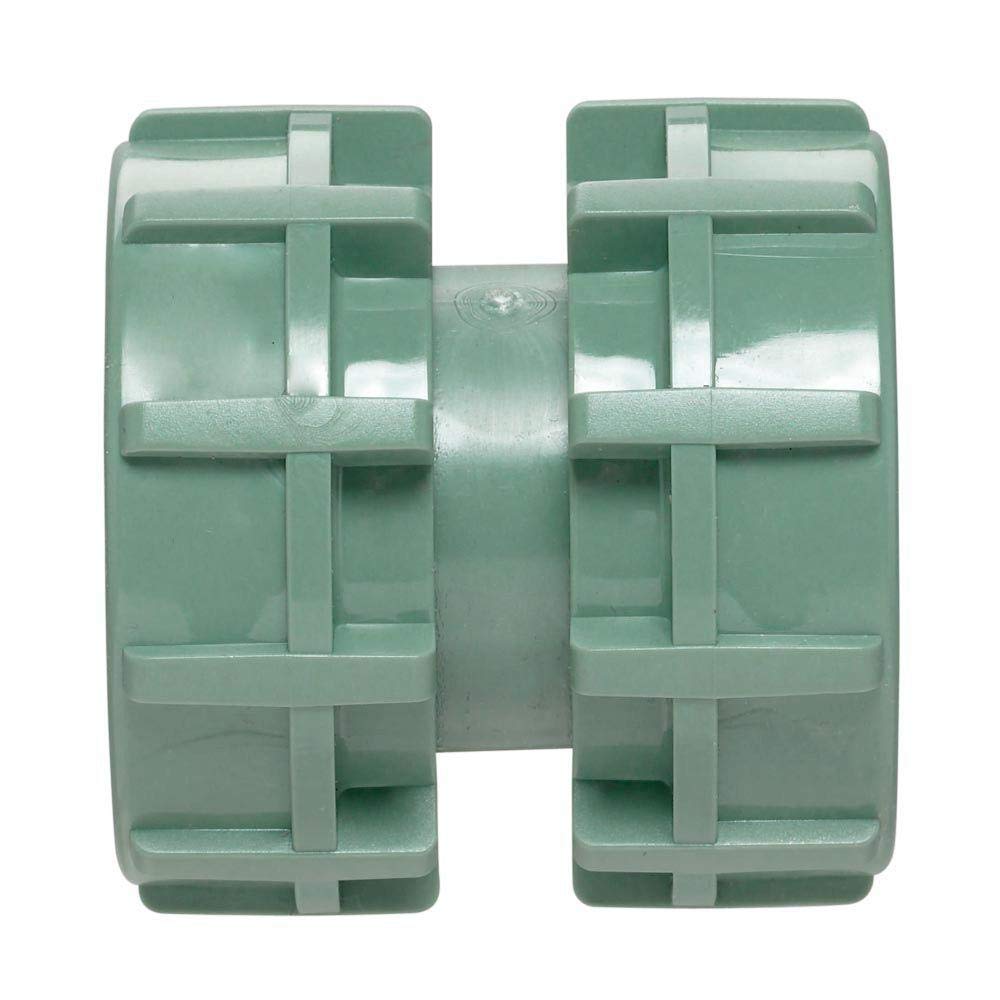
Family Handyman’s irrigation installation guidance consistently emphasizes planning your manifold assembly before purchasing components. That advice is especially relevant here: an Orbit preassembled manifold is not directly chainable to a second Orbit section without an intermediate coupler. The Orbit double union coupler — sold separately — is a required add-on, not an included accessory, when building 5- or 6-zone systems from chained Orbit sections. If you’re at 3 or 4 zones and not planning to expand, you’ll never encounter this limitation.
Orbit
$4.97
In stock on Amazon
Check price on AmazonH3: The Multi-Zone Residential Builder at 5 to 8 Zones
At 5 or more zones, the calculus shifts. Chaining two Orbit manifold sections requires the double union coupler referenced above, and at 7 or 8 zones you’re chaining three sections with two couplers — a configuration that introduces additional leak points and, per aggregated installer experience, begins to show meaningful pressure drop at residential supply pressures of 40 to 70 PSI. Beyond roughly 6 to 8 valves total, cumulative pressure loss through the manifold body and couplers starts affecting zone performance.
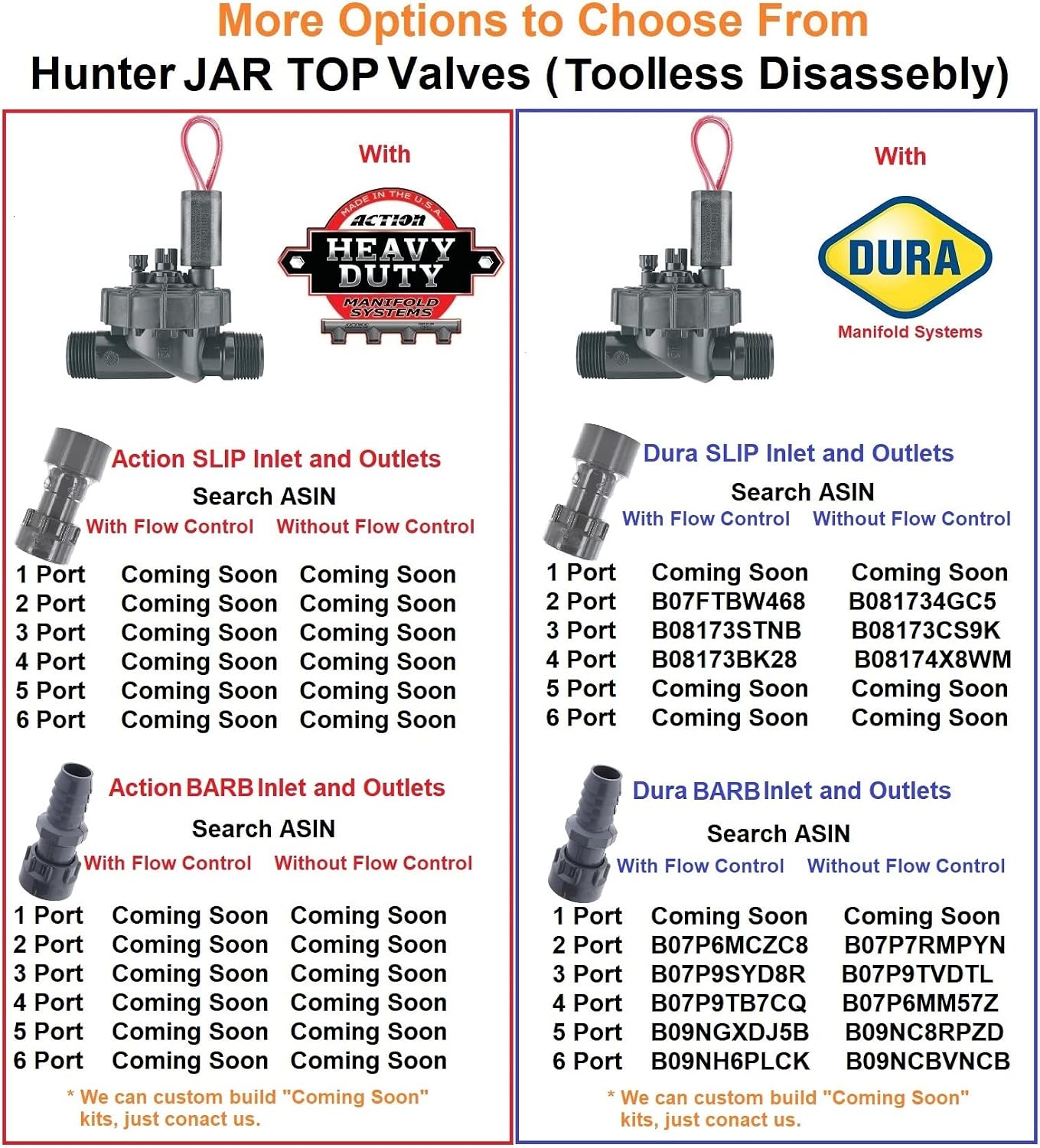
At this scale, the Hunter PGV slip manifold approach is cleaner both physically and logistically. You spec a rail sized for your zone count, thread on individual PGV valves, and you’re done with no couplers, no chaining geometry, and no pressure-drop arithmetic. Per Hunter Industries’ PGV Series Valve Installation and Maintenance Manual, individual PGV valve bodies use threaded inlet and outlet connections — meaning you can remove a single valve for service without cutting pipe. The slip manifold body itself connects to supply pipe with standard PVC primer and cement, but the valve-to-manifold interface is threaded throughout.
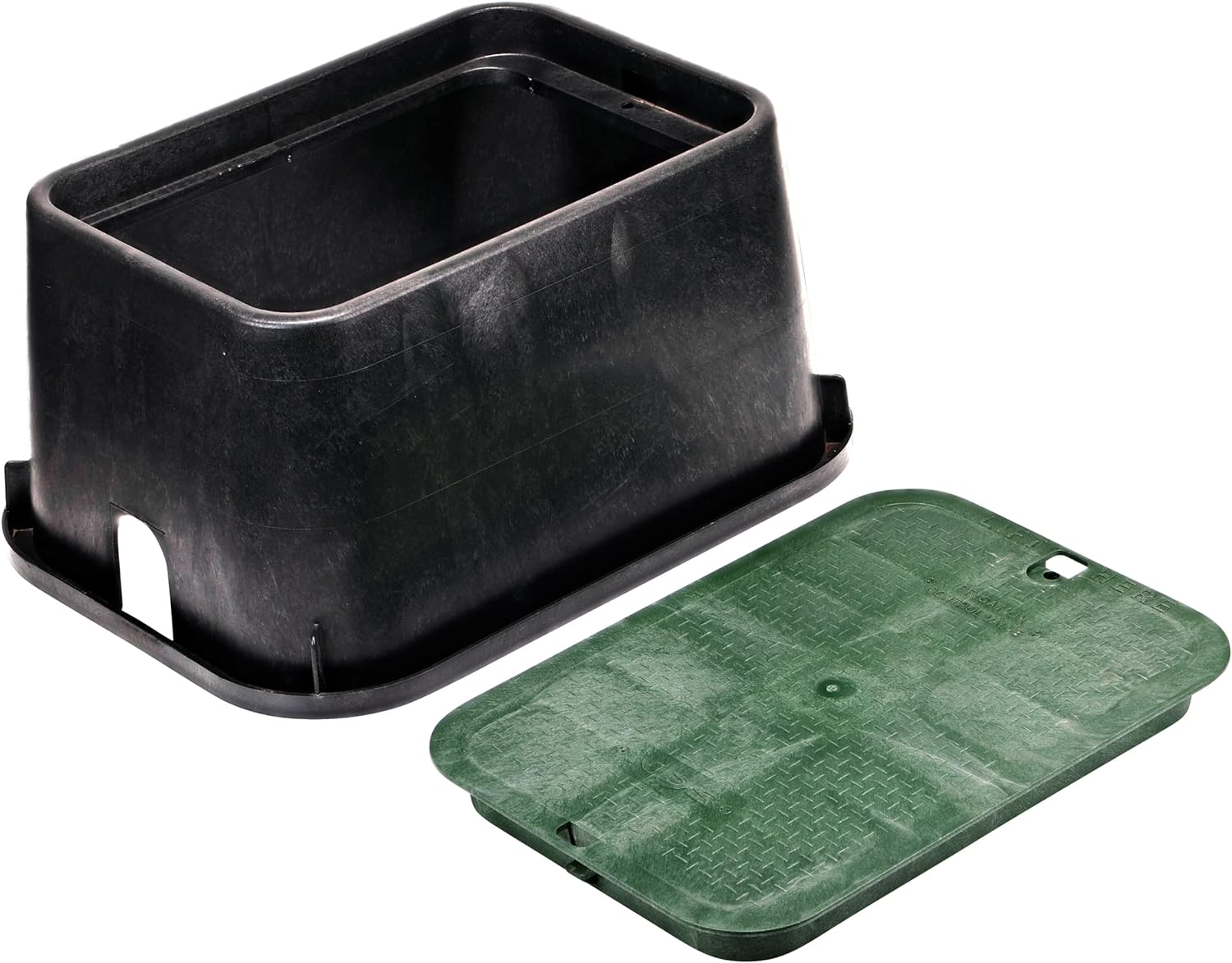
This Old House’s irrigation valve box selection guidance recommends sizing your valve box for the manifold footprint plus a minimum of 4 inches on each side for wire management and future service access. For a 4-valve Hunter PGV build, a standard 10x16-inch rectangular valve box is the typical fit; a 6- or 8-valve build will require a larger rectangular or two-gang box, which should be specified before trenching.
Parts cost for the Hunter PGV path runs $180 to $260 for a 4-zone build and scales proportionally — higher upfront than the Orbit preassembled option, but justified at this zone count by cleaner assembly geometry and deeper serviceability.
NDS
$52.83
In stock on Amazon
Check price on AmazonH3: The Light-Commercial Operator Managing Multiple Properties
For operators running irrigation systems across multiple properties — whether a landscaping business, a property management portfolio, or a multi-site HOA — parts standardization is the dominant decision variable, and the Hunter PGV platform wins this category without serious competition.
Hunter Industries’ PGV Series Valve Installation and Maintenance Manual documents rebuild kits, diaphragm sets, and solenoid replacements as discrete line items available through irrigation supply distributors. Operators who standardize on Hunter PGV across a portfolio carry one parts inventory in the truck — diaphragms, solenoid coils, flow control stems — that services every manifold on every property. Orbit manifold service parts, by contrast, are primarily available through big-box retail channels and are not consistently stocked at the commercial irrigation supply houses that professional operators use.
The Irrigation Association’s Landscape Irrigation Scheduling and Water Management (2014 edition) frames component standardization as a core principle of efficient irrigation system maintenance for multi-site operations — a point that favors the Hunter platform’s depth of institutional adoption. Operators in aggregated multi-property accounts report Hunter PGV valve internals — diaphragms and solenoids — lasting through 5 to 8 season cycles before requiring rebuild kits, which is a meaningful service interval for a commercial maintenance budget.
At this tier, the $70 to $100 additional upfront cost of a Hunter PGV build versus an Orbit preassembled manifold is trivial against the labor savings of a standardized parts ecosystem. The Hunter platform is also compatible with the full range of commercial-grade controllers — Rachio 3, Hunter Pro-HC, Rain Bird ESP-TM2 — without modification, using standard 24VAC solenoid wiring throughout.
Hunter
$157.84
In stock on Amazon
Check price on AmazonComparison at a Glance
| Factor | Orbit Preassembled (4-valve) | Hunter PGV Slip Build (4-valve) |
|---|---|---|
| Typical parts cost | $90–$130 Orbit — $4.97 | $180–$260 Hunter — $157.84 |
| Installation time (est.) | 45–90 min Orbit — $4.97 | 2–3 hrs Hunter — $157.84 |
| Individual valve serviceability | Yes (solenoid; seat kit) NDS — $52.83 | Yes (full rebuild kit) Hunter — $157.84 |
| Parts availability | Moderate (big-box focused) Orbit — $4.97 | High (supply house + online) Hunter — $157.84 |
| Expandability | Coupler-chained sections NDS — $52.83 | Rail sizing + valve addition Hunter — $157.84 |
| Best fit zone count | 3–4 zones Orbit — $4.97 | 4–8+ zones Hunter — $157.84 |
Installation Details That Determine Success
Orbit preassembled manifold installation notes:
Inlet and outlets use standard PVC cement slip-fit connections — no threading on the manifold body itself. The valve box base matters more than most buyers anticipate: an improperly supported manifold in an in-ground box puts stress on glue joints over time. Reviewers confirm that the manufacturer-matched rectangular valve box base fits the 4-valve assembly and eliminates improvised blocking. Use the correct base. Do not substitute bricks.
Above-ground installations in non-freezing climates are reported as trouble-free. In freeze zones, the plastic manifold body is susceptible to crack damage if not properly drained before the first hard frost. In USDA hardiness zones 6 and below, in-ground installation with an insulated box cover and a seasonal blow-out protocol is the correct approach regardless of manifold type — a point reinforced by the Irrigation Association’s Landscape Irrigation Scheduling and Water Management, which identifies unprotected above-ground plastic components as a primary cause of cold-season system failures.
Hunter PGV slip manifold installation notes:
Per Hunter Industries’ PGV Series Valve Installation and Maintenance Manual, the PGV valve body connects to the manifold rail via threaded fittings — no cement at the valve interface. This is the feature that enables single-valve removal without cutting pipe in year 4. The slip manifold body itself requires PVC primer and cement for connection to supply and zone lines, but once that initial installation is cured, every subsequent service operation is threaded.
This Old House’s valve box installation guidance calls for at least 4 inches of clearance around the manifold footprint on all sides — a number worth measuring before you set the box, because tight wire routing in an undersized box creates service complications that grow worse with each subsequent visit.
Frequently Asked Questions
Can I connect two Orbit manifold sections directly to each other? No. The Orbit manifold sections do not connect directly — the body geometry does not allow it. The Orbit double union coupler is a required add-on purchase, sold separately, for any 5- or 6-zone build using chained Orbit sections. Budget for it before you buy your second section.
How many Orbit manifold sections can I chain before pressure loss becomes a problem? Two sections (6 to 8 valves total) is the practical limit at residential supply pressures of 40 to 70 PSI. Beyond that, cumulative pressure drop through the manifold body and couplers begins to affect zone performance. At 7 or more zones, a Hunter PGV slip manifold sized for the full zone count is the cleaner engineering choice.
Does the Hunter PGV manifold require PVC cement at every connection? No. Per Hunter Industries’ PGV Series Valve Installation and Maintenance Manual, the slip manifold body connects to supply pipe with PVC primer and cement, but the individual PGV valve bodies thread onto the manifold — no cement required at the valve connection. This is what enables single-valve removal without cutting pipe.
Can I replace just one solenoid on an Orbit preassembled manifold? Yes. Individual solenoids are replaceable without pulling or disturbing the manifold body. The documented 3-year, 1,000-actuation owner account confirms this — the one failure in that run was a single solenoid, replaced in isolation. Full manifold replacement is not required for a solenoid failure.
Is an above-ground manifold more vulnerable to freeze damage? Yes, meaningfully so. Above-ground plastic manifold assemblies exposed to freezing temperatures carry higher crack risk than in-ground installations, which benefit from soil thermal mass and a covered valve box. The Irrigation Association’s Landscape Irrigation Scheduling and Water Management (2014 edition) specifically identifies unprotected above-ground plastic components as a primary cause of cold-season residential irrigation failures. In freeze-prone climates, in-ground installation with seasonal blow-out is the correct protocol for either platform.
The Decision in Plain Terms
Three zones or four, first-time DIY installation, fastest path to operational: Orbit preassembled manifold. Lower parts cost, 45-to-90-minute installation, confirmed single-solenoid replaceability, and a clean 3-year durability record in owner documentation.
Five zones or more, multi-property operation, or any situation where long-term parts standardization has value: Hunter PGV on a slip manifold. The threaded valve-to-manifold interface, the deep parts ecosystem at irrigation supply distributors, and the clean rail-based expandability all favor the Hunter platform at this scale. The higher upfront parts cost is justified by lower long-term service friction.
The $2,000 contractor quote is real. The parts are not. Pick the platform that fits your zone count and service model, and put the savings back into the system.