September 22, 2026 • Tomás Guerreiro • 11 min reading time • Specs verified June 18, 2026
Orbit B-hyve vs. Rachio Smart Hose Timer: Hose-Bib Smart Watering for Multi-Zone Setups Without In-Ground Wiring
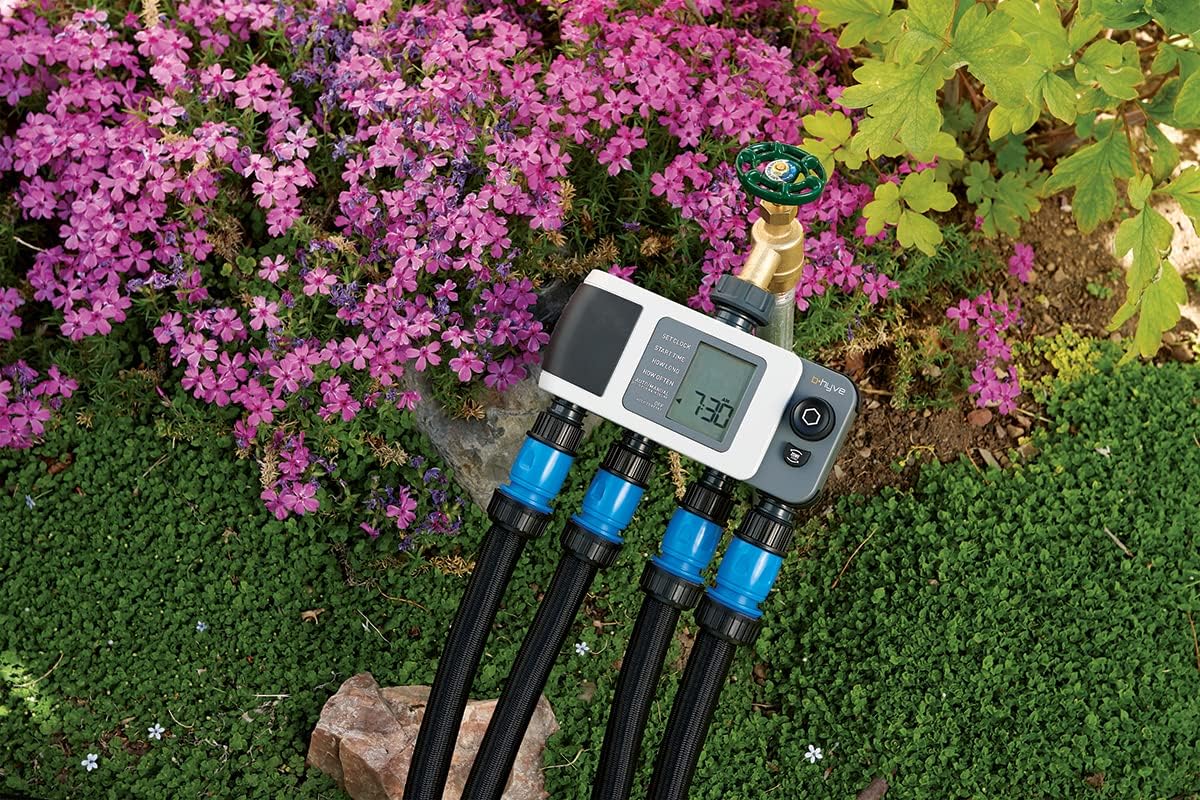
A hose-bib smart watering timer is exactly what it sounds like: a WiFi- or Bluetooth-connected valve that threads onto any outdoor spigot — the threaded faucet mounted on the side of your house — and lets you schedule irrigation from your phone with no trenching, no low-voltage wire runs, and no licensed electrician. If you have a yard that needs water but no buried irrigation system, these devices are the fastest path to automated, schedule-optimized watering. The catch is that most spigots can only serve one hose at a time, so “multi-zone” setups — watering the vegetable beds separately from the lawn, for example — require either multiple spigots, a multi-port timer, or a splitter. That’s where the tradeoffs between the Orbit B-hyve XD 4-port and the Rachio smart hose timer get genuinely interesting, and genuinely complicated.
This article is a decision-frame comparison for the person who’s already past “should I bother?” and into “which one do I actually buy, and what’s going to break?” We’ll name the real bugs, show the math, and end with explicit if/then decision rules.
The Core Tradeoff: Ecosystem Depth vs. Hardware Simplicity
Before you look at specs, understand the strategic fork in the road.
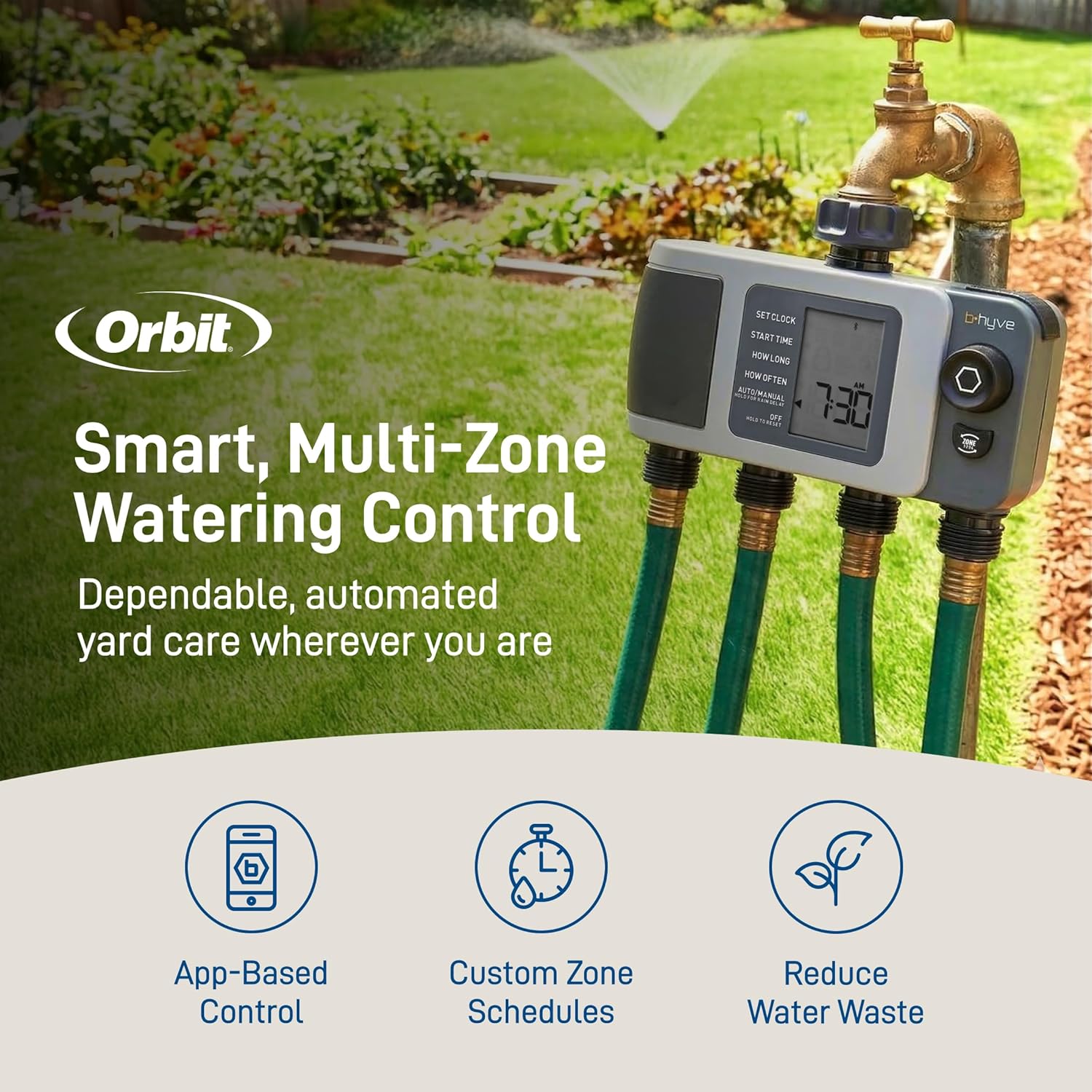
Orbit B-hyve is a full ecosystem play. The same app controls B-hyve indoor/outdoor controllers, single-zone hose timers, and the XD 4-port multi-zone unit. If you already have Orbit B-hyve hardware, or plan to mix hose-bib watering with an eventual in-ground controller, you’re looking at a single app managing everything. That’s genuinely valuable — until the cross-device compatibility issues described below undercut the promise.
Rachio’s hose timer is an extension of a smart controller ecosystem that irrigation practitioners already respect. Rachio 3 owners who want to cover a detached garden zone without wiring appreciate native app integration. Owners who run three or more Rachio hose timers consistently report satisfaction with the app’s schedule logic and familiar interface. The tradeoff is that Rachio’s hose timer functions more as a satellite device than a standalone hub — its value multiplies if you’re already in the Rachio ecosystem, and it’s harder to justify as a first-timer’s entry point compared to a standalone multi-port unit.
Side-by-Side Specs
| Feature | Orbit B-hyve XD 4-Port | Rachio Smart Hose Timer | RAINPOINT WiFi Timer |
|---|---|---|---|
| Zones per unit | 4 | 1 | 1 |
| Connectivity (base) | Bluetooth; WiFi hub sold separately | WiFi built-in | WiFi built-in |
| Rain delay logic | WeatherSense (forecast-based) | Weather Intelligence (forecast-based) | Schedule-based with manual override |
| Weatherproofing | IP54 splash-resistant | Outdoor-rated; no published IP rating | Outdoor-rated; no published IP rating |
| Battery life (typical) | ~6 months (4 × AA) | ~6 months (lithium) | ~6 months (4 × AA) |
| Ecosystem lock-in | B-hyve app required | Rachio app required | RAINPOINT app required |
| Relative price tier | Mid | Premium | Budget |
Orbit B-hyve XD 4-Port: Four Zones From One Spigot
What the B-hyve XD Gets Right
The XD 4-port is the most polarizing product in this category, and the owner review signal is worth taking seriously before you buy.
The upside is real: owners who get it working describe it as a credible alternative to a 4-zone in-ground manifold for surface-level drip or soaker hose setups. Four independent zones on one spigot, controlled by schedule or manually from the app, is a genuinely useful configuration for a kitchen garden or perimeter bed setup. Family Handyman’s guidance on multi-zone hose timer configurations explains that port consolidation of this type is the primary reason buyers upgrade from single-zone timers — avoiding the need to manage individual valves scattered across the yard is a meaningful quality-of-life improvement. The B-hyve XD is the mainstream product that most directly solves this problem from a single spigot.
Orbit
$77.20
In stock on Amazon
Check price on AmazonThe Compatibility Bug You Need to Know About
This is not a minor footnote. Multiple owners — including documented cases involving five or more existing B-hyve devices already on one account — report that adding the XD 4-port to the B-hyve app disrupted communication with their entire existing B-hyve fleet. The disruption described is loss of schedule control across previously functional units, not a minor hiccup. For anyone running a mixed B-hyve setup, this is a serious pre-purchase risk that should be treated as an active compatibility concern until Orbit publishes firmware documentation that explicitly addresses the cross-device conflict.
The WiFi Hub Gap
The base B-hyve XD relies on Bluetooth for local control. Bluetooth range from inside a typical house is roughly 30 to 50 feet through walls — workable if your spigot is directly outside your back door, but not adequate for remote scheduling when you’re away from the property. True remote access requires the separately sold B-hyve WiFi hub. This is not always clear in product listings, and owners specifically call out the documentation quality as actively misleading about which features require the hub. Budget for the hub and plan installation time accordingly if remote access matters to your use case.
WeatherSense Rain Delay: A Critical Distinction
B-hyve’s WeatherSense delays are forecast-triggered, not sensor-triggered. The system checks weather forecast data and skips scheduled watering if rain is predicted. The EPA’s WaterSense program — as documented in the agency’s “Outdoor Water Use in the United States” fact sheet, available at epa.gov — identifies forecast-based schedule skipping as an established water-conservation approach. However, it is fundamentally different from a physical rain sensor, which responds to actual precipitation hitting your yard. If the forecast predicts a 60 percent chance of rain and nothing falls, your zones skip watering anyway. If local microclimatic conditions diverge from the regional forecast — common in suburban and semi-rural settings — you may see dry plants after a scheduled “rain delay” day. This is the same architecture Rachio uses, so it is a category-level reality, not an Orbit-specific failure.
Rachio Smart Hose Timer: Class-Leading App, One Zone at a Time
Strong App Logic and Native Ecosystem Integration
Rachio earned its reputation in the smart controller space through sophisticated scheduling logic, and the hose timer carries that forward. The Irrigation Association’s “Smart Irrigation Controller Performance Testing” technical brief, available through irrigation.org, consistently identifies weather-responsive schedule adjustment as the highest-leverage feature for water savings. Rachio’s Weather Intelligence implementation in the hose timer inherits the same forecast-integration architecture as the Rachio 3 controller. If you already own a Rachio 3, adding the hose timer adds a satellite zone to your existing dashboard without learning a second interface.
Owners who run three or more Rachio hose timers across a property — covering front beds, side yard drip, and back lawn from separate spigots — consistently report satisfaction with the unified app experience and schedule flexibility. For multi-property light commercial operators managing sites without in-ground systems, this stacking approach is worth knowing about. Three Rachio hose timers covering three independent spigot zones is a legitimate, if slightly hardware-heavy, alternative to a three-zone manifold with buried wire.
This Old House, in its smart hose-end timer buying guide, identifies app integration quality and scheduling flexibility as the two most important differentiators among WiFi hose timers — both are areas where the Rachio hose timer leads the category.
Orbit
$129.98
In stock on Amazon
Check price on AmazonThe Durability Flag
One documented owner report describes water intrusion into the battery compartment after extended outdoor exposure — significant enough that the owner resorted to wrapping the battery door in plastic wrap as a field fix. This is a real durability concern. The manufacturer rates the unit for outdoor use, but an independent IP rating is not publicly published, which limits how precisely you can evaluate its weatherproofing claims against a valve rated to a specific ingress protection standard. If you’re mounting in a location with sustained rain exposure, overhead sprinkler overspray, or freeze-thaw cycling, consider aftermarket weatherproof housing or a protected mounting location. This risk applies primarily to units left fully exposed to weather for multiple seasons.
RAINPOINT WiFi Timer: A Third-Way Budget Option
Range-First Performance in Large-Lot Contexts
Any honest practitioner-level piece on hose-bib smart watering needs to acknowledge RAINPOINT, which surfaces consistently as a third-way option in owner reviews and editorial roundups. Family Handyman and This Old House have both covered hose timer alternatives that prioritize WiFi range and value, and RAINPOINT fits that profile squarely.
The standout performance data point from field owner reports is documented WiFi range reaching up to 150 feet through dense vegetation and mixed terrain — a figure that meaningfully outperforms Bluetooth-dependent setups in large-lot applications where the spigot is far from the house router. RAINPOINT’s customer service accessibility is also cited as a trust signal by owners who’ve worked through warranty issues.
If your spigot is at one end of a large property and your router is on the opposite side of the house, the range specification alone justifies evaluation before defaulting to either the B-hyve or Rachio platforms. The tradeoff is a less sophisticated weather-response system compared to either of the primary options — RAINPOINT relies on manual schedule overrides rather than integrated forecast logic. For the cost-focused buyer who just needs reliable remote on/off control at distance, that’s often an acceptable trade.
Biswing
$18.99
In stock on Amazon
Check price on AmazonDecision Rules: If X, Then Y
If you already own B-hyve hardware and are considering adding the XD 4-port: Pause. The cross-device compatibility bug is real and documented by multi-unit owners. Check Orbit’s current firmware release notes before purchasing, and have a plan for your existing fleet if communication breaks after adding the new unit.
If you want four zones from one spigot and don’t own any B-hyve gear: The XD 4-port is still the only mainstream product in this category at this port count. Go in with clear expectations about the hub requirement and documentation gaps — budget time for setup, not just money, and plan for the hub purchase from the start.
If you’re in the Rachio ecosystem and need one or two hose-bib zones on the same property: The Rachio hose timer is the path of least resistance. The app integration is native, the scheduling logic is class-leading, and you’re not learning a second interface. Address the battery compartment exposure risk proactively with weatherproof housing or a sheltered mount.
If you’re managing multiple properties or a large single lot with distant spigots: Run the WiFi range numbers on your specific layout before committing to either platform. Bluetooth-dependent base units will fail at distance; RAINPOINT’s documented range advantage may be determinative in that scenario.
If you want forecast-based rain delay and understand it’s not the same as a physical sensor: Both B-hyve and Rachio deliver this well. If you want actual sensor-triggered delay, neither hose timer delivers it — you need a wired rain sensor paired with an in-ground controller.
Frequently Asked Questions
Can I run the Orbit B-hyve XD 4-port alongside older single-zone B-hyve units on the same app? In theory, yes — the B-hyve app is designed to manage multiple device types. In practice, multiple owners report that adding the XD 4-port disrupted communication with their existing B-hyve fleet. This is an active compatibility concern, not a resolved one as of mid-2026.
Does the B-hyve XD base model require the separate WiFi hub for remote control? Bluetooth-only reach from inside a house is typically 30 to 50 feet through walls — usable if your spigot is close and you’re always home. For true remote access when away from the property, the separately sold WiFi hub is required. This requirement is underemphasized in standard product listings.
Is the Rachio smart hose timer actually weatherproof enough for year-round outdoor mounting? The manufacturer rates it for outdoor use, but an independent IP rating is not publicly published. At least one owner documented battery compartment water intrusion after sustained outdoor exposure. For high-exposure installations, consider aftermarket weatherproof housing or a sheltered mounting position.
How do forecast-based rain delays work differently from a physical rain sensor? A physical rain sensor responds to actual precipitation at your location. Forecast-based delay skips watering based on predicted weather — which may not match what actually falls in your yard. Both B-hyve WeatherSense and Rachio Weather Intelligence use the forecast model. The EPA’s WaterSense outdoor water use guidance, available at epa.gov, identifies both approaches as conservation tools while noting that locally responsive sensors produce more precise results in microclimatic conditions.
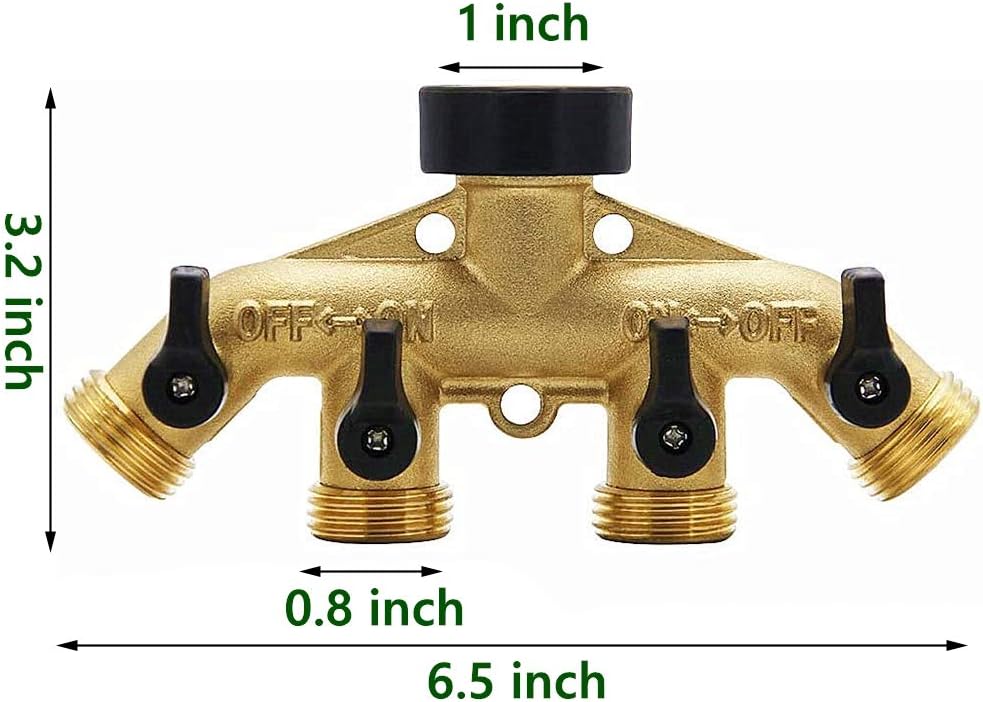
Can I connect multiple hose timers to a single outdoor spigot using a splitter? Yes — a standard Y-splitter or multi-port manifold adapter allows multiple timers on one spigot, each controlling its own zone independently. Flow and pressure are divided among open zones, so confirm your spigot’s GPM output supports simultaneous flow before running zones concurrently.
What happens to scheduled watering if my WiFi goes down? Most WiFi-connected hose timers, including B-hyve and Rachio models, store the current schedule onboard and continue executing it during WiFi outages. Remote adjustments won’t sync until connectivity is restored, but your plants won’t go unwatered due to a router reboot or temporary internet outage.