August 24, 2026 • Tomás Guerreiro • 11 min reading time • Specs verified June 18, 2026
MP Rotator Adjustment in Practice: The Tool, the Arc, and the Distance Fixes Real Owners Figured Out
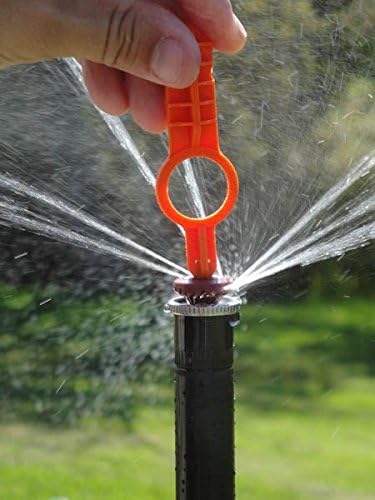
If you’ve ever watched a sprinkler head soak your driveway while barely grazing the lawn edge, you already understand the core problem with a poorly adjusted rotary nozzle. An MP Rotator — short for “multi-trajectory precision rotator” — is a type of sprinkler nozzle that spins streams of water slowly across a set arc, rather than blasting a fine mist all at once. That slow, rotating delivery is the whole point: it puts water down at a rate the soil can actually absorb, reducing runoff and evaporation. But getting the arc (the sweep angle) and the distance (how far the water throws) dialed in for your specific yard geometry is where most owners either stop short or call someone they don’t need to call. This guide covers both adjustments with the specificity that product packaging skips — including the one inexpensive tool that changes the whole experience.
| EDITOR'S PICKHunter Sprinkler MPSS530 MP Rot… | Mid-tierHunter Sprinkler MP300090 MP Ro… | Budget pickHunter mptool Adjustment Wrench… | |
|---|---|---|---|
| Throw range | 5- to 30-ft strip | 22- to 30-ft radius | — |
| Pattern | Side strip | Adjustable | — |
| Arc range | — | 90° to 210° | — |
| Type | Sprinkler head | Sprinkler head | Adjustment wrench |
| Tool included | ✗ | ✗ | ✓ |
| Price | $9.99 | $9.39 | $5.67 |
| See on Amazon → | See on Amazon → | See on Amazon → |
Why Owners Get Stuck: The Arc Is Easy, the Distance Isn’t
Here’s the honest picture from owners who have been through this: arc adjustment on an MP Rotator is genuinely straightforward once you know which collar to turn. The collar rotates the fixed edge of the arc, and you extend or shrink the sweep by rotating the head itself relative to that edge. Most owners figure this out within a few minutes of reading the Hunter spec sheet.
Distance reduction is a different story. Reviewers across multiple MP Rotator model lines consistently flag this as the step that trips people up. One owner reviewing the MP2000 series put it plainly: they still couldn’t quite see how distance adjustment was supposed to work without a physical reference. The reason is counterintuitive — you’re not turning a radius ring like on a gear-drive rotor. Instead, a small setscrew on the nozzle body limits the top of the water stream’s arc. Without knowing where that screw is or what direction reduces throw versus increases it, most owners either skip it or inadvertently make things worse.
This is precisely where the Hunter MP Rotator Adjustment Tool — commonly called the mptool wrench — earns its place in your gear bag.
The $5 Tool That Replaces a $175 Service Call
One of the most cited data points in owner reviews of the Hunter mptool wrench is a specific and avoidable cost: a homeowner reported being quoted $175 for a professional visit to adjust MP Rotator heads that were overshooting a bed edge and hitting a fence. They solved the entire problem themselves after purchasing the adjustment tool for a few dollars. That ratio — a few dollars versus $175 — is the clearest possible argument for owning this tool before you need it, not after.
The mptool has two working ends. One end is sized to engage the distance-reduction setscrew precisely, which is a hex fitting that no standard screwdriver tip seats correctly in without risk of stripping. The other end functions as a nozzle-pull tool, letting you lift a seated nozzle out of the body without the fingernail-breaking fumble that usually comes with nozzle swaps. Reviewers who have used it consistently report that the distance adjustment — the step that confused them on first read — becomes logical the moment the correct tool is engaged with the correct fitting. The fit matters: the setscrew is small, the access angle is tight, and improvising with a flathead tends to produce either stripped hardware or no adjustment at all.
By the numbers — MP Rotator adjustment at a glance:
- Arc adjustment range: 90° to 210° (model-dependent; the MP1000 and MP2000 are factory-set adjustable, some 360° models are fixed)
- Distance reduction: up to approximately 25% below rated throw radius, per Hunter Industries product documentation
- Setscrew engagement tool: proprietary hex fit — standard screwdrivers are not a reliable substitute
- Quoted professional adjustment fee (one owner review): $175 for a head-adjustment visit
Distance and Arc Fixes: What the Adjustment Actually Does in the Field
Let’s walk through both adjustments the way an experienced installer would explain them to a new tech.
Arc adjustment starts by identifying your fixed (non-rotating) edge — the side of the spray pattern that stays anchored, typically aimed at a hard edge like a fence, wall, or driveway. You rotate the entire nozzle body to position that fixed edge correctly, then adjust the collar to set how wide the sweep runs from that anchor. On most residential MP Rotator models, this is a tactile, indexed rotation — you’ll feel and sometimes hear it clicking into position. Hunter Industries’ product documentation confirms the adjustment range varies by model, with the MP2000 offering the broadest flexibility for standard turf zones.
Distance reduction is the field fix that solves overshoot problems without replacing the nozzle. Turning the distance-reduction setscrew (with the mptool engaged) incrementally limits how high the streams arc, which shortens their trajectory. The relationship isn’t perfectly linear — you don’t get 10% less throw per full turn — so the practical method reviewers describe is: make a quarter-turn adjustment, run the zone briefly, observe, repeat. Over-reducing is reversible; you simply back the screw out. But you cannot increase throw beyond the factory maximum by turning this screw the other direction, which is a common misconception. If your MP Rotator isn’t throwing far enough for a given head spacing, you’re looking at a pressure or nozzle-model issue, not an adjustment fix.
One local-knowledge point worth noting: reviewers in hot, dry climates specifically mention that local irrigation professionals in their area actively steered them toward MP Rotators over standard mist heads. The reasoning, as described by one MP2000-360° owner, was direct — fine mist evaporates before it reaches the ground in high-heat conditions, while the heavier, slower-moving streams from MP Rotators actually arrive at the soil. This is consistent with EPA WaterSense guidance on distribution uniformity and the Irrigation Association’s landscape best management practices, both of which identify low-precipitation-rate nozzles as a meaningful efficiency gain in arid zones.
The Runtime Reality Nobody Puts in the Marketing Copy
If you’re switching a zone from standard fixed-spray heads to MP Rotators, there is one operational change that will blindside you if nobody flags it: your zone runtime needs to roughly double.
This is not a flaw. It’s the tradeoff embedded in the design. Standard spray heads deliver water at a precipitation rate of roughly 1.5 to 2.0 inches per hour. MP Rotators deliver at approximately 0.4 to 0.5 inches per hour, per Hunter Industries’ published precipitation rate data. That slower delivery is why runoff is reduced on slopes and clay soils — the soil can keep up with the intake rate. But to apply the same total volume of water your turf needs, the zone has to run longer.
At least one informed reviewer flagged this as essential knowledge that doesn’t appear in the standard marketing materials, and it’s easy to see why it gets missed: if you install MP Rotators and keep the same runtime as your old heads, you’ll be underwatering. The grass will show stress within a few weeks and you’ll spend time diagnosing what looks like a pressure or coverage problem when the actual issue is total volume. A smart controller like the Rachio 3 or Hunter Pro-HC handles this automatically when you enter the correct nozzle precipitation rate in the zone configuration — which is another strong argument for pairing these heads with a controller that has a proper nozzle library, not a basic timer.
The UC ANR landscape irrigation scheduling guides (Hanson et al.) address this directly in the context of matched precipitation rates across mixed nozzle types, reinforcing that runtime is the adjustment variable when precipitation rates change.
Hard Water and Clogged Nozzles: The Maintenance Fix That Works
Owners in hard-water regions — the Southwest, much of the Intermountain West, parts of Texas — report a specific failure mode: calcium and mineral scale building up inside the nozzle body and on the rotating mechanism, causing the head to either spin erratically or stop rotating entirely. The symptom looks like a dead head, and without knowing the cause, the instinct is to replace it.
One MP3500 owner described the actual fix: remove the nozzle, submerge it in white vinegar overnight, then flush it thoroughly with clean water before reinstalling. Reviewers who have followed this procedure report that it restores full function in most cases where the issue is scale rather than physical damage. This Old House’s sprinkler system maintenance guide similarly recommends vinegar soaks as a first-line response to mineral clogging in drip and spray components before resorting to replacement.
A few operational notes on this fix: use undiluted white vinegar, not diluted cleaning vinegar. The overnight soak duration matters — short soaks of an hour or two don’t fully dissolve heavy scale deposits. And inspect the filter screen at the base of the nozzle while you have it out; that screen is the first place debris and scale accumulate, and it’s often the primary flow restriction even when the nozzle itself looks clean.
Frequently Asked Questions
Do I need the Hunter adjustment wrench tool, or can I adjust MP Rotators with a regular screwdriver? For arc adjustment, a screwdriver isn’t part of the process at all — that’s a collar and body rotation. For distance reduction, the setscrew uses a proprietary hex geometry that standard flathead tips don’t engage cleanly. Reviewers consistently report stripping risk with improvised tools. The Hunter mptool wrench is the correct instrument for this specific fitting, and given the cost differential between the tool and a service call, it’s not a close decision.
How much longer do I need to run MP Rotator zones compared to my old standard spray heads? Expect roughly double the runtime. Standard spray heads run at approximately 1.5–2.0 inches per hour precipitation rate; MP Rotators run at approximately 0.4–0.5 inches per hour, per Hunter Industries published data. Your total water delivery stays the same — you’re just slowing the rate to reduce runoff and evaporation. If you’re using a smart controller, update the nozzle precipitation rate in the zone settings and let the controller recalculate runtime automatically.
Can I mix MP Rotator heads with standard spray nozzles on the same irrigation zone? No — and this is one of the more common installation mistakes. MP Rotators and standard spray heads have dramatically different precipitation rates. If they share a zone, one type will be either overwatering or underwatering while the other runs correctly. Mixed-nozzle zones are flagged as a design error in Irrigation Association best management practices. Run MP Rotators on their own zones.
My MP Rotator heads won’t fully pop up — could switching from standard heads to MP Rotators fix low-pressure problems? Probably not in the way you’re hoping. MP Rotators operate at a lower precipitation rate, but they don’t reduce the pressure required for the heads to pop up and rotate correctly — they actually require adequate pressure (typically 40–55 PSI at the head) to function as designed. If heads aren’t fully extending, that’s a GPM or pressure supply issue upstream of the head. Diagnose your static and dynamic pressure before attributing the problem to nozzle type.
How do I clean a clogged MP Rotator nozzle with calcium or mineral buildup? Remove the nozzle from the body, submerge it in undiluted white vinegar, and soak overnight. Flush thoroughly with clean water before reinstalling. While the nozzle is out, inspect and clear the filter screen at the nozzle base — that screen traps the majority of debris. Owners in hard-water climates report this method restoring full rotation in most non-damaged nozzles. If the nozzle still doesn’t rotate after a full soak and flush, physical damage or wear is likely the cause.
Which MP Rotator model should I use for a narrow strip of lawn next to a driveway? The MP1000 is the correct choice for narrow strips — it’s designed for throws in the 8–15 foot range, which matches the typical 3–6 foot strip geometry when paired with a corner or edge pattern. The MP2000 and MP3500 throw too far for tight strips and will overshoot the target area regardless of distance adjustment. Match the nozzle model to the head spacing first; adjustment can fine-tune, but it can’t replace choosing the right base model for the geometry.
Buying Decision: What to Get and Why
If you’re doing any arc or distance work on MP Rotator heads, the Hunter MP Rotator Adjustment Tool (mptool wrench) is the one item that makes the difference between guessing and actually dialing things in. The cost is low enough that it belongs in your irrigation bag before you need it.
For nozzle selection: MP1000 for strips and tight corners, MP2000 for standard turf zones in the 8–20 foot range, MP3500 for larger turf areas. If you’re in a hot, arid climate where mist-type heads struggle with evaporation loss, reviewers and local installers alike point to the MP Rotator series as the functionally correct choice — not just a premium upgrade.
Pair any MP Rotator zone with a controller that has a nozzle precipitation rate input — the Rachio 3 and Hunter Pro-HC both support this — and set your runtime accordingly. That single configuration step prevents the underwatering problem that sends owners chasing the wrong diagnosis for weeks.